The year 2024 witnesses a remarkable surge in wearable electronics, pushing the boundaries of what’s possible in personal technology. From revolutionary materials enabling flexible and durable devices to innovative power sources extending battery life and sophisticated sensors monitoring vital health metrics, the advancements are transformative. This exploration delves into the core innovations shaping the future of wearable technology, examining the materials science, power solutions, sensor technologies, data management, and diverse applications driving this exciting field forward.
This rapid evolution is not just about smaller, sleeker devices; it’s about increased functionality, improved accuracy, and enhanced integration into our daily lives. We’ll examine the challenges and opportunities presented by these advancements, considering the ethical implications of data privacy and the potential impact across various sectors, from healthcare and fitness to industrial applications.
Materials Science Advancements in Wearable Electronics
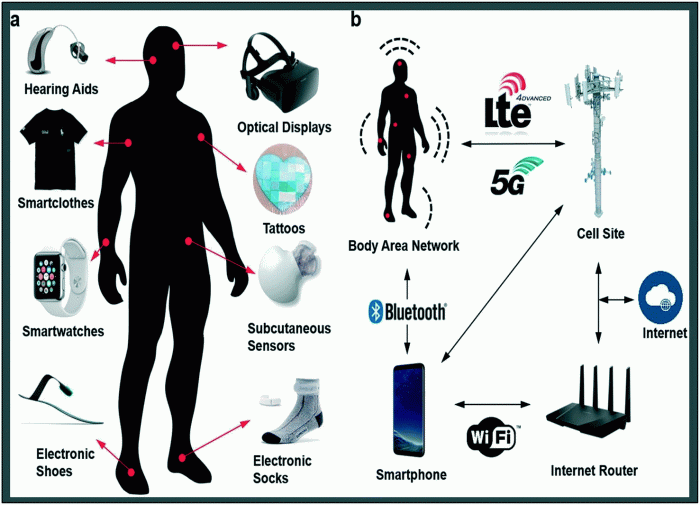
The rapid evolution of wearable electronics is intrinsically linked to advancements in materials science. The demand for devices that are flexible, lightweight, durable, and biocompatible has driven significant innovation in the development of new materials and manufacturing processes. This section will explore the latest breakthroughs in materials science that are shaping the future of wearable technology.
Flexible and Stretchable Electronics
The creation of truly flexible and stretchable electronics necessitates materials that can withstand significant bending, stretching, and twisting without compromising functionality. Recent innovations focus on developing substrates and conductive pathways that possess exceptional mechanical flexibility and resilience. This involves exploring new material combinations and architectures to achieve high performance even under deformation. For instance, researchers are investigating the use of elastomeric polymers as substrates, which can be stretched considerably without breaking, coupled with conductive materials that can maintain their electrical properties under strain.
These advancements are critical for creating comfortable and adaptable wearable devices that conform seamlessly to the human body.
The Role of Graphene and Carbon Nanotubes
Graphene and carbon nanotubes (CNTs) are two prominent examples of nanomaterials that are revolutionizing flexible electronics. Graphene, a single layer of carbon atoms arranged in a honeycomb lattice, possesses exceptional electrical conductivity, high tensile strength, and flexibility. CNTs, on the other hand, are cylindrical structures made of rolled-up graphene sheets, offering excellent mechanical properties and electrical conductivity. These materials are incorporated into flexible circuits and sensors to enhance their performance and durability.
For example, graphene can be used as a transparent and conductive electrode in flexible displays, while CNTs can be integrated into stretchable sensors to monitor physiological signals. The integration of these nanomaterials often involves techniques like solution processing, where the materials are dispersed in a solvent and then deposited onto a substrate, enabling large-scale and cost-effective manufacturing.
Comparison of Materials for Flexible Circuits and Sensors
Various materials are employed in flexible circuits and sensors, each with its unique advantages and limitations. The choice of material depends on the specific application requirements, such as flexibility, conductivity, biocompatibility, and cost. For example, polymers like polyimide are widely used for their flexibility and high temperature resistance, while metals like silver are favoured for their high conductivity. However, the inherent brittleness of metals limits their use in highly flexible applications.
Therefore, researchers are actively exploring alternative conductive materials, such as conductive polymers and metallic nanowires, which offer a balance of conductivity and flexibility. The biocompatibility of the materials is also crucial for applications in direct contact with the skin, requiring careful material selection to minimize any adverse biological reactions.
Manufacturing Processes for Advanced Materials
The fabrication of advanced materials for wearable applications requires sophisticated manufacturing techniques. These techniques often involve multiple steps to create the desired material properties and device architectures. For instance, the fabrication of flexible circuits typically involves several steps: substrate preparation, deposition of conductive layers (e.g., using printing techniques such as inkjet or screen printing), patterning of the conductive layers (e.g., using photolithography), and encapsulation to protect the circuit from environmental factors.
For stretchable electronics, more complex techniques, such as micro-transfer printing or laser-induced forward transfer, may be employed to integrate the active components onto stretchable substrates. The development of efficient and scalable manufacturing processes is critical to enabling the widespread adoption of wearable electronics.
Material Comparison Table
| Material | Flexibility | Conductivity (Siemens/meter) | Biocompatibility |
|---|---|---|---|
| Polyimide | High | Low (depending on additives) | Generally good |
| Graphene | High | Very High (106 – 107) | Requires further investigation for long-term biocompatibility |
| Silver Nanowires | Moderate to High | High (depending on density and arrangement) | Generally good, but toxicity concerns at high concentrations |
Power Sources for Wearable Electronics
The relentless miniaturization of wearable electronics demands equally impressive advancements in power sources. These devices, ranging from fitness trackers to sophisticated medical implants, require power solutions that are both compact and efficient, capable of powering increasingly complex functionalities without compromising wearability or user comfort. This section will explore the current state-of-the-art in battery technology and energy harvesting for wearable applications.
Miniaturization and Energy Efficiency of Batteries
Significant progress has been made in miniaturizing batteries while simultaneously improving their energy density. Solid-state batteries, for example, are emerging as a promising alternative to traditional lithium-ion batteries. They offer enhanced safety due to the absence of flammable liquid electrolytes and the potential for higher energy density, leading to longer battery life in smaller packages. Research also focuses on optimizing battery materials and architectures to maximize energy storage capacity and minimize self-discharge rates.
For instance, the development of novel cathode and anode materials with improved electrochemical properties is crucial for increasing energy density and cycle life. Companies like Samsung and LG are actively investing in this area, with ongoing efforts to develop flexible and thin-film batteries tailored for wearable devices. These advancements contribute to smaller, lighter, and longer-lasting wearable devices.
Energy Harvesting Techniques
Energy harvesting offers a compelling approach to power wearable electronics, reducing or eliminating the reliance on conventional batteries. Solar energy harvesting, using flexible and efficient photovoltaic cells, is gaining traction. These cells can be seamlessly integrated into wearable devices, converting ambient light into usable electrical energy. Kinetic energy harvesting, which captures energy from human motion, is another promising avenue.
Piezoelectric materials, which generate electricity in response to mechanical stress, can be incorporated into wearable straps or clothing to harvest energy from movement. Similarly, triboelectric nanogenerators (TENGs) exploit the contact electrification between different materials to generate electricity. These methods, while still under development, offer the potential for self-powered wearables, extending their operational lifespan and eliminating the need for frequent battery replacements.
A significant challenge lies in improving the efficiency and power output of these energy harvesting methods to meet the growing energy demands of advanced wearable devices.
Comparison of Battery Technologies for Wearable Devices
Several battery technologies compete for dominance in the wearable electronics market. Lithium-ion batteries currently hold the largest market share due to their relatively high energy density and established manufacturing infrastructure. However, they suffer from limitations such as limited cycle life and safety concerns. Solid-state batteries offer a potential solution to these issues, but their high manufacturing cost and limited availability currently hinder widespread adoption.
Thin-film batteries provide excellent flexibility and miniaturization capabilities, but their energy density might be lower than other options. Zinc-air batteries offer high energy density and are environmentally friendly, but their shelf life and power output can be limited. The choice of battery technology depends on the specific requirements of the wearable device, considering factors such as energy density, cycle life, safety, cost, and size.
Schematic Diagram of an Energy Harvesting and Storage System in a Smartwatch
The following describes a hypothetical smartwatch energy system:Imagine a smartwatch with a flexible solar cell integrated into the watch band. This solar cell (Component 1) converts ambient light into a low-voltage DC current. This current then flows to a boost converter (Component 2), a small circuit that increases the voltage to a level suitable for charging the battery.
The boost converter is essential because the solar cell’s output voltage is usually too low to directly charge the battery. The boosted voltage is then fed into a rechargeable lithium-ion polymer battery (Component 3), a thin, flexible battery ideal for wearable devices. This battery serves as the primary energy storage unit, supplying power to the smartwatch’s various components (e.g., processor, sensors, display).
A battery management system (BMS) (Component 4) monitors the battery’s state of charge (SOC), voltage, and current, ensuring safe and efficient charging and discharging. The BMS also protects the battery from overcharging, over-discharging, and short circuits. Finally, a power management unit (PMU) (Component 5) regulates the power distribution to the different components of the smartwatch, optimizing energy consumption and maximizing battery life.
This system incorporates energy harvesting from solar power and stores it in a rechargeable battery, managed by sophisticated circuitry to ensure optimal performance and longevity.
Sensor Technologies in Wearable Electronics
The miniaturization and sophistication of sensors are driving the rapid expansion of wearable electronics in healthcare and beyond. Advancements in materials science and microfabrication techniques have enabled the creation of incredibly small, energy-efficient sensors capable of accurately monitoring a wide range of physiological parameters. This has led to the development of wearable devices that are both comfortable and highly informative, paving the way for personalized healthcare and improved well-being.Miniaturized Sensors for Health Monitoring: Significant progress has been made in developing smaller, more accurate sensors for vital signs such as heart rate, blood oxygen saturation (SpO2), and electrocardiograms (ECGs).
For example, photoplethysmography (PPG) sensors, commonly used for heart rate monitoring, have become increasingly compact and are now integrated into even the smallest of smartwatches. Similarly, advancements in micro-electromechanical systems (MEMS) technology have enabled the development of highly sensitive and miniaturized ECG sensors that can be comfortably worn on the skin. These advancements allow for continuous and unobtrusive monitoring of these crucial health indicators.
Accuracy and Reliability of Wearable Sensor Technologies
The accuracy and reliability of wearable sensors vary depending on the technology employed and the specific application. While PPG-based heart rate monitors are generally accurate for most individuals, they can be affected by factors such as motion artifacts and skin pigmentation. Similarly, SpO2 sensors can be less accurate in individuals with poor peripheral circulation. ECG sensors, while increasingly accurate, can still be susceptible to noise interference from external sources.
To address these limitations, researchers are actively developing advanced signal processing algorithms and incorporating multiple sensor modalities to improve the overall accuracy and reliability of wearable health monitoring systems. For instance, machine learning techniques are increasingly used to filter out noise and improve the signal-to-noise ratio, leading to more reliable readings.
Novel Sensor Technologies in Wearable Devices
Beyond traditional sensors, novel technologies are emerging that offer enhanced capabilities for wearable health monitoring. For example, flexible and stretchable sensors, made from materials like conductive polymers and nanomaterials, conform seamlessly to the body, improving comfort and signal quality. These sensors can be integrated into fabrics and other flexible substrates, allowing for the creation of truly unobtrusive wearable devices.
Another promising area is the development of electrochemical sensors for the detection of various biomarkers in sweat, offering a non-invasive way to monitor glucose levels, lactate, and other metabolites. Furthermore, advancements in optical sensing techniques, such as Raman spectroscopy and fluorescence imaging, are enabling the development of wearable devices capable of detecting subtle changes in skin composition and providing insights into hydration levels and other physiological parameters.
Challenges and Future Directions in Wearable Sensor Technology
Despite significant advancements, several challenges remain in the field of wearable sensor technology. One major challenge is improving the long-term stability and reliability of sensors, particularly in harsh environments. The need for improved power efficiency is also critical, as many wearable devices rely on limited battery capacity. Furthermore, data security and privacy concerns associated with the collection and transmission of sensitive health data need to be addressed.
Future directions in wearable sensor technology include the development of even smaller, more energy-efficient, and biocompatible sensors, as well as the integration of multiple sensor modalities for comprehensive health monitoring. Advances in artificial intelligence and machine learning will also play a crucial role in improving the accuracy and interpretation of sensor data, leading to more personalized and effective healthcare interventions.
Emerging Sensor Technologies for Wearables
The following list highlights five emerging sensor technologies with their applications and limitations:
- Bio-impedance Spectroscopy (BIS): Measures the electrical impedance of the body to assess body composition, hydration levels, and even detect early signs of certain diseases. Limitations: Susceptible to electrode placement and variations in skin impedance.
- Microfluidic Sensors: Miniaturized devices that analyze bodily fluids like sweat or tears, enabling continuous monitoring of various biomarkers. Limitations: Requires careful fluid management and can be prone to clogging.
- Electrodermal Activity (EDA) Sensors: Measure changes in skin conductance, providing insights into stress levels, emotional states, and autonomic nervous system activity. Limitations: Can be affected by environmental factors and individual variations in skin conductance.
- Gas Sensors: Detect volatile organic compounds (VOCs) in breath or sweat, potentially enabling early detection of diseases like diabetes or lung cancer. Limitations: Sensitivity and selectivity can be challenging, and cross-reactivity with other compounds may occur.
- Ultrasound Sensors: Miniaturized ultrasound transducers integrated into wearables can enable non-invasive monitoring of blood flow, heart function, and other internal organs. Limitations: Image quality can be affected by motion artifacts and tissue depth.
Data Processing and Communication in Wearable Electronics
The efficient processing and transmission of data are critical for the functionality and effectiveness of wearable electronics. These devices generate substantial amounts of sensor data, which needs to be processed, interpreted, and often transmitted wirelessly to external systems for analysis and storage. This process involves several key aspects, including the choice of communication protocols, on-device processing capabilities, and strategies for ensuring data security and user privacy.
Data from wearable sensors, such as accelerometers, gyroscopes, heart rate monitors, and skin temperature sensors, is typically collected through analog-to-digital conversion (ADC). This digital data is then pre-processed on the device itself, often involving filtering, noise reduction, and feature extraction techniques. This pre-processing step aims to reduce the volume of data transmitted, conserving energy and bandwidth. After preprocessing, the data is either stored locally or transmitted wirelessly to a smartphone, computer, or cloud server for further analysis and storage.
The selection of a communication protocol significantly impacts power consumption, data throughput, and range.
Low-Power Communication Protocols
Low-power communication protocols are essential for extending the battery life of wearable devices. Bluetooth Low Energy (BLE) is a widely adopted protocol due to its low power consumption, reasonable data throughput, and relatively wide range. Other protocols like ANT+ and Zigbee are also used, each with its own strengths and weaknesses regarding power consumption, data rate, and range. The choice depends on the specific application and requirements.
For instance, BLE is suitable for many health monitoring applications due to its balance between power efficiency and data transfer capability. For applications demanding higher data rates, such as real-time video streaming from a wearable camera, other protocols might be more appropriate, though likely at the cost of higher power consumption.
On-Device Data Processing Advancements
Advancements in low-power microcontrollers and dedicated hardware accelerators are enabling more sophisticated on-device data processing. This minimizes the need for transmitting raw data, reducing power consumption and latency. For example, sophisticated algorithms for activity recognition can be implemented directly on the device, identifying activities like walking, running, or sleeping based on sensor data. This reduces the amount of data needing to be transmitted, as only the classified activity data (e.g., “walking”) rather than the raw sensor readings is sent.
Similarly, machine learning models can be deployed on-device for real-time analysis and decision-making, such as detecting anomalies in heart rate patterns.
Security and Privacy Implications
The data collected by wearable devices often contains sensitive personal information, raising significant security and privacy concerns. Data breaches could expose health data, location information, and even biometric data, leading to identity theft or other serious consequences. Therefore, robust security measures are essential, including encryption of data both during transmission and storage, secure authentication mechanisms, and access control policies.
Furthermore, data anonymization and aggregation techniques can help to protect individual privacy while still allowing for valuable insights from aggregate data analysis. Regulations like GDPR and HIPAA play a crucial role in establishing standards for the collection, processing, and storage of personal data from wearable devices.
Data Flow in a Wearable Health Monitoring System
The following flowchart illustrates the typical data flow in a wearable health monitoring system:
The system begins with sensor data acquisition from various sensors embedded in the wearable device. This raw data undergoes preprocessing on the device, including filtering and feature extraction. The preprocessed data is then transmitted wirelessly, typically via BLE, to a smartphone or other gateway device. This gateway device further processes the data and may perform additional analysis before transmitting it to a cloud server for storage and advanced analysis.
The cloud server stores the data securely and allows authorized users (e.g., healthcare providers or the individual user) to access and analyze the data through a user interface. Throughout the entire process, encryption and security protocols are implemented to protect the sensitive health data.
Applications of Wearable Electronics in 2024
Wearable electronics are rapidly transforming various sectors, impacting how we monitor health, track fitness, and interact with our environment. Their increasing sophistication, coupled with miniaturization and improved power efficiency, has broadened their application scope significantly in 2024. This section will explore the current and emerging applications of wearable technology across several key industries, highlighting both their capabilities and limitations.
Healthcare Applications of Wearable Electronics
Wearable devices are revolutionizing healthcare through continuous patient monitoring and remote diagnostics. Smartwatches and fitness trackers now routinely monitor heart rate, sleep patterns, and activity levels, providing valuable data for preventative healthcare. More advanced devices are capable of detecting irregular heart rhythms (atrial fibrillation), falls, and even early signs of certain diseases. For instance, continuous glucose monitors (CGMs) for diabetics provide real-time blood glucose readings, improving diabetes management and reducing the risk of complications.
Furthermore, wearable electrocardiograms (wearable ECGs) enable the remote detection of cardiac events, facilitating timely interventions. The integration of these devices with telehealth platforms enables remote patient monitoring, reducing hospital readmissions and improving patient outcomes. However, data privacy and security remain crucial concerns requiring robust encryption and data protection measures. The accuracy of some wearable sensors can also vary depending on factors such as skin type and device placement, potentially leading to misinterpretations of data.
Fitness and Wellness Applications of Wearable Electronics
The fitness and wellness sector has seen a significant boost from wearable technology. Smartwatches and fitness trackers offer detailed tracking of physical activity, including steps taken, calories burned, and distance covered. Advanced devices incorporate GPS tracking for outdoor activities and heart rate variability (HRV) analysis for stress monitoring. These capabilities empower individuals to make informed decisions about their fitness routines and overall well-being.
Moreover, wearable technology facilitates personalized training programs by analyzing individual performance data and providing tailored feedback. Gamification features in many fitness apps further encourage consistent engagement and motivate users to achieve their fitness goals. Limitations include the potential for inaccurate data due to sensor limitations and the possibility of overreliance on technology, rather than holistic lifestyle changes.
Other Applications of Wearable Electronics
Beyond healthcare and fitness, wearable electronics are finding applications in diverse sectors. In the industrial sector, wearable devices enhance worker safety by monitoring vital signs and environmental conditions. Smart glasses and augmented reality (AR) headsets are improving efficiency in manufacturing and maintenance by providing real-time information and guidance to workers. In the fashion industry, wearable technology is integrated into clothing to provide features such as temperature regulation and haptic feedback.
Furthermore, in the military and security sectors, wearable sensors monitor soldiers’ physiological parameters, enhancing situational awareness and improving response times. However, challenges remain in terms of battery life, durability, and the integration of these technologies into existing workflows.
Case Study: Wearable ECGs in Early Detection of Atrial Fibrillation
The widespread adoption of wearable ECGs is significantly impacting the early detection and management of atrial fibrillation (AFib), a common heart rhythm disorder. Devices such as the Apple Watch and KardiaMobile have been shown to accurately detect AFib through analysis of the wearer’s electrocardiogram. These devices empower individuals to monitor their heart rhythm continuously, allowing for early detection of AFib episodes, which may otherwise go unnoticed.
Early detection is crucial as AFib increases the risk of stroke and other cardiovascular complications. By providing timely alerts and encouraging users to seek medical attention, wearable ECGs are improving patient outcomes and reducing healthcare costs associated with late-stage AFib diagnosis and treatment. This successful application demonstrates the transformative potential of wearable electronics in proactive healthcare management.
Electronic Telephone Systems (Separate Topic)
The evolution of electronic telephone systems represents a significant technological leap, transforming communication from analog signals to the sophisticated digital networks we rely on today. This transition has dramatically increased capacity, efficiency, and the range of features available to users. This section will explore the key stages of this evolution, the architecture of modern systems, and a comparison of different technologies.The shift from analog to digital telephone systems involved a fundamental change in how voice signals are transmitted.
Early analog systems used continuous electrical signals that mirrored the sound waves of a voice. These signals were prone to noise and distortion, limiting the quality and distance of communication. The advent of digital technology allowed for the conversion of analog voice signals into digital data, represented as a series of ones and zeros. This digital representation allowed for more efficient transmission, noise reduction, and the integration of advanced features.
The development of pulse-code modulation (PCM) was a crucial step in this process, enabling the efficient encoding and decoding of voice signals into digital form.
Architecture and Functionality of Modern Electronic Telephone Systems
Modern electronic telephone systems utilize a variety of architectures and technologies, with VoIP (Voice over Internet Protocol) and PBX (Private Branch Exchange) systems being prominent examples. VoIP systems transmit voice calls over internet networks using IP packets, offering flexibility and cost-effectiveness. PBX systems, on the other hand, are private telephone networks within organizations, managing internal and external calls. These systems often integrate advanced features such as call routing, voicemail, and conferencing.
The functionality of both systems relies on a complex interplay of hardware and software components, including network interfaces, codecs (for encoding and decoding voice signals), and signaling protocols (for managing call setup and termination).
Comparison of Electronic Telephone System Technologies
Different electronic telephone system technologies offer various advantages and disadvantages. VoIP systems are generally more cost-effective for long-distance calls and offer greater flexibility in terms of location and device independence. However, they can be susceptible to network issues and may require a reliable internet connection for optimal performance. PBX systems provide greater control over internal communication and advanced features tailored to business needs, but they are typically more expensive to install and maintain.
Traditional circuit-switched networks, while still in use, are generally less flexible and more expensive than VoIP and modern PBX systems.
Key Components and Protocols Used in Electronic Telephone Systems
Several key components and protocols are crucial for the operation of electronic telephone systems. These include:* Network Interfaces: These provide the connection between the telephone system and the network, whether it’s the internet (for VoIP) or a dedicated telephone line (for traditional systems).
Codecs
These are responsible for converting analog voice signals into digital data and vice versa. Common codecs include G.711, G.729, and Opus.
Signaling Protocols
These protocols manage the setup and termination of calls, including SIP (Session Initiation Protocol) for VoIP and ISDN (Integrated Services Digital Network) signaling for traditional systems.
Switching Systems
These manage the routing of calls within a network, whether it’s a PBX or a larger public switched telephone network (PSTN).
Comparison of Three Different Electronic Telephone Systems
| Feature | VoIP | PBX | Traditional PSTN |
|---|---|---|---|
| Cost | Generally lower, especially for long-distance calls | Higher initial investment, ongoing maintenance costs | Moderate to high, depending on usage |
| Flexibility | High, can be accessed from various devices and locations | Moderate, primarily within the organization’s network | Low, limited to fixed lines |
| Features | Wide range of features, often integrated with other applications | Advanced features tailored to business needs | Basic features, limited scalability |
In conclusion, the advancements in wearable electronics in 2024 represent a significant leap forward, promising a future where technology seamlessly integrates with our bodies to enhance our health, productivity, and overall well-being. While challenges remain, particularly in areas of data security and power efficiency, the innovative solutions emerging offer compelling reasons for optimism. The convergence of materials science, miniaturization, and advanced sensor technologies is paving the way for a new era of personalized and connected experiences, transforming how we interact with the world around us.
Quick FAQs
What are the biggest challenges facing the development of wearable electronics?
Key challenges include extending battery life, ensuring data security and privacy, improving sensor accuracy and reliability, and addressing potential health concerns related to prolonged device use.
How much do wearable electronics typically cost?
The cost varies greatly depending on the device’s features and capabilities. Simple fitness trackers can be relatively inexpensive, while advanced medical-grade wearables can be significantly more expensive.
Are wearable electronics safe for long-term use?
The safety of long-term use depends on the specific device and individual factors. It’s crucial to choose reputable brands and follow usage guidelines. Potential risks include skin irritation and electromagnetic field exposure.
What is the future of wearable electronics?
Future trends suggest even greater miniaturization, improved integration with AI, enhanced bio-sensing capabilities, and wider adoption across various industries, leading to a more seamless and personalized technological experience.