Navigating the modern world of travel necessitates the right technological companions. This guide explores the essential portable electronics for seamless journeys in 2024, examining the latest trends, power solutions, connectivity options, and security considerations. From optimizing data usage to safeguarding personal information, we delve into the practical aspects of staying connected and secure while exploring new horizons.
We’ll uncover the top devices, analyze emerging technologies impacting the travel experience, and discuss the future of portable electronics in shaping the way we travel. Whether you’re a seasoned globetrotter or a first-time adventurer, this comprehensive resource will empower you to make informed choices and maximize your travel experience.
Top 5 Portable Electronics for Travel in 2024
Traveling in the modern era often relies on a suite of portable electronics to ensure smooth journeys and enhance the overall experience. From staying connected to capturing memories, these devices are becoming increasingly indispensable for the modern traveler. This section details five essential portable electronics that will significantly improve your travel experience in 2024.
Top 5 Portable Electronics for Travel in 2024
Choosing the right portable electronics can make or break a trip. The following table Artikels five key devices, highlighting their benefits for travelers.
| Device | Benefit 1 | Benefit 2 | Benefit 3 |
|---|---|---|---|
| Noise-Cancelling Headphones | Reduces distractions on flights and in busy environments, promoting relaxation and better sleep. | Enhances audio quality for listening to music, podcasts, or audiobooks. | Provides a sense of privacy in shared spaces. |
| Portable Power Bank | Keeps your devices charged on the go, eliminating the worry of running out of battery. | Offers multiple charging ports for simultaneously charging multiple devices. | Provides peace of mind, especially in areas with limited access to power outlets. |
| Smartphone with Global Data Plan | Provides constant connectivity for navigation, communication, and accessing information. | Acts as a camera, translator, and entertainment device all in one. | Facilitates easy booking of transportation and accommodation. |
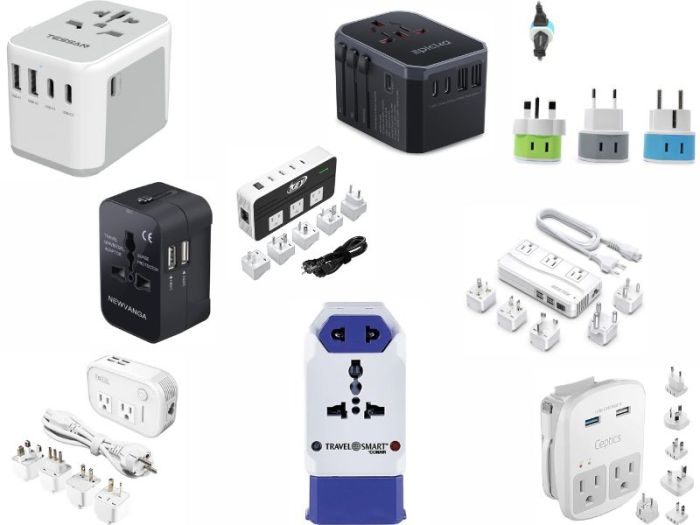
| Universal Travel Adapter | Enables charging of electronics in various countries, avoiding the need for multiple adapters. | Often includes USB ports for charging multiple devices simultaneously. | Saves space and weight in your luggage. |
| E-reader | Allows you to carry a vast library of books, magazines, and documents without the weight of physical copies. | Reduces eye strain compared to screens, making it ideal for long reading sessions. | Offers adjustable font sizes and brightness for comfortable reading in various lighting conditions. |
Comparison of Top 5 Portable Electronics
This table compares the battery life, weight, and key features of the five devices. Note that specific values may vary depending on the model and manufacturer. These are representative figures based on popular models available in early 2024.
| Device | Battery Life (approx.) | Weight (approx.) | Key Features |
|---|---|---|---|
| Noise-Cancelling Headphones | 20-30 hours | 200-300 grams | Active noise cancellation, Bluetooth connectivity, comfortable earcups |
| Portable Power Bank | Varies greatly by capacity (e.g., 10,000mAh = multiple charges for a smartphone) | 200-400 grams | Multiple USB ports, fast charging capability, LED power indicator |
| Smartphone (typical flagship) | 12-24 hours | 150-250 grams | High-resolution camera, GPS, global data roaming capability |
| Universal Travel Adapter | N/A | 50-150 grams | Multiple plug types, USB ports, surge protection |
| E-reader | Weeks (depending on usage) | 150-300 grams | High-resolution display, adjustable brightness, built-in light |
Emerging Trends in Portable Travel Electronics
The landscape of portable electronics for travel is constantly evolving, driven by advancements in technology and changing traveler needs. Three key trends are shaping the future of how we stay connected and entertained on the go: enhanced power efficiency, integrated security features, and the rise of versatile, multi-functional devices. These trends are not only improving the convenience of travel but also impacting our overall travel experience, both positively and negatively.
Enhanced Power Efficiency in Portable Devices
Power efficiency is paramount for travelers. Nobody wants to be stranded with a dead phone or laptop in a remote location. The emerging trend focuses on devices with longer battery life and faster charging capabilities. Manufacturers are employing innovative battery technologies, such as solid-state batteries and improved energy management systems, to extend usage time significantly. For example, some new smartphones boast battery life exceeding two days on a single charge, while portable chargers are becoming smaller and more powerful, capable of rapidly charging multiple devices simultaneously.
This trend translates to reduced anxiety about power availability, allowing travelers to focus more on their experiences rather than their devices’ battery levels. However, a potential drawback is the increased cost associated with these advanced battery technologies, making some devices more expensive for consumers. Furthermore, the rapid advancement in battery technology also means a shorter lifespan of older devices, leading to increased e-waste.
Integrated Security Features in Portable Travel Electronics
Travelers are increasingly concerned about the security of their personal data and devices. The rise of biometric authentication, such as fingerprint and facial recognition, alongside enhanced encryption protocols, is addressing these concerns. Many new laptops and smartphones now include these features, allowing for secure access and data protection. Furthermore, some travel-specific gadgets, like smart luggage with integrated GPS tracking and biometric locks, are gaining popularity.
This trend offers peace of mind to travelers, minimizing the risk of theft or unauthorized access to sensitive information. However, the reliance on biometric data raises privacy concerns, as the security of this data is crucial. A data breach involving biometric information could have far-reaching consequences. Additionally, the complexity of these security systems can sometimes make devices more difficult to use.
Versatile, Multi-Functional Portable Devices
The demand for streamlined travel is driving the development of devices that combine multiple functionalities. Instead of carrying separate devices for different purposes, travelers are opting for versatile gadgets. A prime example is the rise of tablets that can function as e-readers, entertainment devices, and even work tools with the addition of a keyboard and stylus. This trend also extends to portable power banks with integrated charging cables and other accessories.
The advantage of multi-functional devices is obvious: reduced weight and bulk in luggage, simplifying packing and travel. However, a potential drawback is that a failure in one function can impact multiple functionalities of the device, making it less reliable than having dedicated devices for each purpose. Also, multi-functional devices might not excel in any single function compared to dedicated devices, leading to a compromise in performance.
Power Solutions for Portable Devices on the Go
Keeping your devices charged while traveling can be a significant challenge. The right power solution can mean the difference between staying connected and being stranded. This section explores various portable power options available in 2024, focusing on their portability, charging speed, and overall efficiency. We’ll delve into the specifics of several popular power banks to illustrate the diversity of choices available to the modern traveler.
The market offers a wide array of portable power solutions, each with its own strengths and weaknesses. Factors to consider include the power bank’s capacity (measured in milliampere-hours or mAh), charging speed (measured in watts or W), number of ports, and additional features such as solar charging capabilities or fast-charging compatibility.
Portable Power Bank Options
Several factors influence the choice of a portable power bank. Capacity determines how many times you can fully charge your devices; charging speed affects how quickly your devices replenish their power; and additional features such as multiple USB ports or solar panels add convenience and versatility. The following examples highlight the range of options available.
- Anker PowerCore 10000: This compact power bank boasts a 10000mAh capacity, sufficient for multiple charges of a smartphone or other small devices. It features a single USB-A port and supports standard charging speeds. Its lightweight design and small size make it highly portable, ideal for slipping into a backpack or carry-on bag. The Anker PowerCore 10000 is known for its reliability and consistent performance.
- RAVPower 20000mAh Portable Charger: Offering double the capacity of the Anker PowerCore 10000, this power bank provides ample power for multiple devices or extended trips. It includes multiple USB ports, allowing for simultaneous charging, and often incorporates fast-charging technology (e.g., Power Delivery or Quick Charge) for significantly faster charging speeds. Its larger size and weight, however, compromise its portability compared to smaller options.
- Jackery Portable Power Station Explorer 240: This is a more substantial power solution, moving beyond simple power banks. The Explorer 240 offers a higher capacity (240Wh) and the ability to power more demanding devices like laptops or small cameras. It features multiple USB ports, as well as AC outlets, allowing for versatile charging and power needs. Its larger size and weight are a trade-off for its increased capacity and power output.
It’s more suitable for longer trips or situations requiring more power than a typical power bank can offer.
Data and Connectivity for Travelers
Staying connected while traveling internationally is crucial for many travelers, whether for business or leisure. Maintaining access to emails, maps, translation apps, and social media requires careful planning and consideration of various data options. Choosing the right solution depends on your travel style, duration of your trip, and data consumption habits.
Several methods exist for managing data usage abroad, each with its own set of advantages and disadvantages. Understanding these differences is key to making an informed decision that aligns with your specific needs and budget.
Data Connectivity Options for International Travelers
Several options are available to travelers seeking reliable internet access while abroad. Each offers a different balance between convenience, cost, and data speed. Careful consideration of these factors is crucial for a smooth and connected travel experience.
- Local SIM Cards: Purchasing a local SIM card offers a cost-effective solution for extended stays. These cards provide a local phone number and access to local data networks, often at significantly lower rates than international roaming. However, they require activating a new phone number and may involve some setup time.
- Portable Wi-Fi Hotspots: These devices create a personal Wi-Fi network, allowing multiple devices to connect simultaneously. They are convenient for groups and offer consistent connectivity, often with a predetermined data allowance. However, they usually come with a daily or weekly rental fee, and the battery life can be a limiting factor for long days of exploration.
- International Data Roaming Plans: This option allows you to use your existing mobile phone plan abroad, but typically at significantly higher rates. While convenient, it can lead to unexpectedly high bills if data usage is not carefully monitored. Many providers offer international roaming add-ons, allowing for a more controlled data allowance and cost.
Cost and Benefit Comparison of Data Options
The optimal data solution depends heavily on individual circumstances. A comparison of costs and benefits helps in making the right choice.
| Option | Cost | Speed | Reliability | Convenience |
|---|---|---|---|---|
| Local SIM Card | Generally low, especially for longer trips | Varies depending on local network infrastructure; can be comparable to domestic speeds. | Varies depending on local network; generally reliable within coverage areas. | Can be less convenient due to setup and potential language barriers. |
| Portable Wi-Fi Hotspot | Moderate; daily/weekly rental fees apply. | Generally good; consistent across multiple devices. | Generally reliable, but dependent on device battery and network availability. | Convenient for multiple devices and easy to use. |
| International Roaming | High; charges are typically per MB or GB used. | Varies depending on network coverage; can be inconsistent. | Dependent on network coverage abroad; can be unreliable in some areas. | Most convenient; uses existing phone number and plan. |
Security and Privacy Considerations for Portable Electronics
Traveling with portable electronics offers incredible convenience, but it also presents significant security and privacy risks. Protecting your devices and the sensitive data they contain is crucial for a smooth and worry-free trip. Failing to take appropriate precautions can lead to identity theft, financial loss, and significant inconvenience. This section Artikels key steps to safeguard your personal information and devices while traveling.Protecting your portable electronics and the data they hold requires a multi-layered approach.
This involves both proactive measures to prevent breaches and reactive strategies to mitigate damage should a breach occur. Strong passwords, data backups, and vigilance against phishing scams are all essential components of a comprehensive security plan.
Strong Passwords and Two-Factor Authentication
Implementing strong, unique passwords for all your accounts is paramount. Avoid easily guessable passwords like birthdays or pet names. Instead, opt for complex passwords that combine uppercase and lowercase letters, numbers, and symbols. Password managers can assist in generating and securely storing these complex passwords. Furthermore, enabling two-factor authentication (2FA) adds an extra layer of security, requiring a second verification method, such as a code sent to your phone or email, in addition to your password.
This significantly reduces the risk of unauthorized access, even if your password is compromised. Many services now offer 2FA as a standard security feature.
Anti-theft Measures
Protecting your physical devices from theft is equally important. Consider using a tracking device or app that allows you to locate your lost or stolen electronics. These apps often provide real-time location tracking and remote locking or wiping capabilities. Additionally, be mindful of your surroundings and avoid leaving your devices unattended in public places. Utilize secure storage options such as hotel safes or locking bags when possible.
Engraving your devices with an identification number can also aid in recovery if they are stolen.
VPN and Secure Wi-Fi Practices
Public Wi-Fi networks, while convenient, often lack robust security measures. Using a Virtual Private Network (VPN) encrypts your internet traffic, protecting your data from prying eyes. A VPN creates a secure, encrypted connection between your device and the internet, masking your IP address and preventing others from intercepting your online activity. Avoid accessing sensitive information, such as banking details or personal emails, on unsecured Wi-Fi networks.
If you must use public Wi-Fi, use a VPN and be cautious about the websites you visit. Look for networks with strong passwords or authentication measures.
Electronic Telephone Systems and Travel

Staying connected while traveling is paramount, and the options for maintaining communication have expanded significantly. Electronic telephone systems play a crucial role in enabling seamless communication across geographical boundaries, offering travelers various choices to suit their needs and budgets. This section explores the different systems available, weighing their advantages and disadvantages to help travelers make informed decisions.International Calling, VoIP, and Satellite Phones offer distinct approaches to communication while traveling.
Each method presents a unique balance of cost, reliability, and accessibility, impacting the traveler’s experience.
International Calling
Traditional international calling, often facilitated through mobile phone roaming agreements or calling cards, remains a popular choice for many travelers. Roaming allows users to utilize their existing mobile number while abroad, but often incurs high per-minute charges. Calling cards provide a potentially more cost-effective alternative, although they may require purchasing credit in advance and navigating different dialing codes.
The reliability of international calling is largely dependent on the network coverage in the destination country, with rural or remote areas often experiencing weaker signals or limited access. Accessibility is generally good in most developed countries, but can be more challenging in less developed regions.
VoIP Services
Voice over Internet Protocol (VoIP) services, such as Skype, WhatsApp, or Google Voice, leverage internet connectivity to make calls. These services frequently offer significantly lower call rates, especially for international calls, compared to traditional mobile roaming. Reliability depends entirely on the availability of a stable internet connection; a weak or absent connection renders the service unusable. Accessibility is high where Wi-Fi or mobile data is available, but is limited in areas with poor internet infrastructure.
Many VoIP apps also offer messaging and video calling functionalities, adding to their versatility. However, VoIP calls may experience latency issues, and the quality can be affected by network congestion.
Satellite Phones
Satellite phones provide a lifeline in remote areas or during emergencies where terrestrial networks are unavailable. They operate by connecting directly to satellites, bypassing terrestrial infrastructure entirely. This ensures communication even in the most remote locations, making them invaluable for adventurous travelers or those working in remote areas. However, satellite phones are generally significantly more expensive than other communication methods, both in terms of the device cost and per-minute call charges.
They also often have lower call quality and slower data speeds compared to terrestrial networks. Accessibility is limited to areas with satellite coverage, although this is becoming increasingly widespread.
The Future of Portable Travel Electronics
The next five years promise a significant leap forward in portable travel technology, driven by advancements in miniaturization, power efficiency, and connectivity. These changes will not only enhance the traveler’s experience but also reshape the travel industry itself, impacting everything from booking and navigation to in-destination experiences. We can expect to see more seamless integration of devices, improved security features, and a greater focus on sustainability.
Enhanced Augmented Reality Navigation and Travel Assistance
Augmented reality (AR) is poised to revolutionize travel navigation and information access. Current AR applications provide basic directions overlaid on a live camera view. However, in the next five years, we anticipate a significant increase in sophistication. We can expect AR systems integrated into smart glasses or even contact lenses to provide real-time translations of signs and menus, identify points of interest with detailed information accessed directly through the user’s gaze, and even offer personalized recommendations based on the user’s travel itinerary and preferences.
This could eliminate the need for bulky guidebooks and maps, providing a more immersive and intuitive travel experience. For example, imagine walking through a historical city and seeing historical facts and images overlaid onto the buildings in real-time, creating a truly engaging and informative experience. This advancement will also impact the travel industry by allowing for more personalized and targeted advertising and recommendations, enhancing the overall tourist experience.
Biometric Security and Seamless Authentication
Biometric authentication is already present in some devices, but its use in travel is expected to expand dramatically. In the coming years, we will likely see a widespread adoption of multi-factor biometric authentication, combining facial recognition, fingerprint scanning, and potentially even iris scanning, for smoother and more secure access to travel documents, airport security checkpoints, and hotel rooms. This will not only improve security by reducing the risk of identity theft and fraud but also significantly streamline the travel process, reducing wait times and improving efficiency.
Consider a future where simply looking at your phone unlocks your boarding pass, and your facial recognition unlocks your hotel room door. This technology is already being implemented in some airports and hotels, but the coming years will see a rapid expansion and refinement. The implications for the travel industry are clear: increased security, reduced operational costs, and improved passenger satisfaction.
Highly Efficient and Sustainable Power Sources
The limitations of battery life are a major concern for travelers. The next five years will likely witness significant breakthroughs in battery technology, leading to longer-lasting and faster-charging portable devices. This could involve the development of more efficient battery chemistries, such as solid-state batteries, or the adoption of innovative charging technologies, such as wireless charging pads embedded in public spaces.
Furthermore, we can expect to see a greater focus on sustainable power sources, including the development of more efficient solar panels integrated into devices or portable solar chargers that are more powerful and lighter. The impact on travel will be profound. Travelers will be less reliant on finding charging stations, leading to greater freedom and convenience. The increased use of sustainable power sources will also align with growing environmental concerns, promoting eco-friendly travel practices.
This shift towards longer-lasting and sustainable power will be crucial for the travel industry to meet growing consumer demands for more sustainable travel options.
In 2024, the right portable electronics can transform your travel experience from stressful to seamless. By understanding the latest trends, prioritizing security, and selecting the optimal power and connectivity solutions, you can stay connected, productive, and entertained wherever your adventures take you. The future of travel technology promises even greater convenience and integration, making exploration more accessible and enjoyable than ever before.
Embrace the possibilities, and travel smarter.
Frequently Asked Questions
What is the best portable charger for international travel?
The “best” charger depends on your needs, but look for high-capacity (mAh) options with multiple USB ports and international voltage compatibility (100-240V).
How can I protect my phone from theft while traveling?
Use a sturdy phone case, consider a hidden pocket or pouch, and enable device tracking features like Find My iPhone or Find My Device.
Are there any downsides to using a VPN while traveling?
VPNs can sometimes slow down internet speeds and may not be compatible with all streaming services. Choose a reputable provider.
What are the best apps for travelers in 2024?
Consider apps for translation, offline maps, currency conversion, flight/hotel booking, and local transportation.


