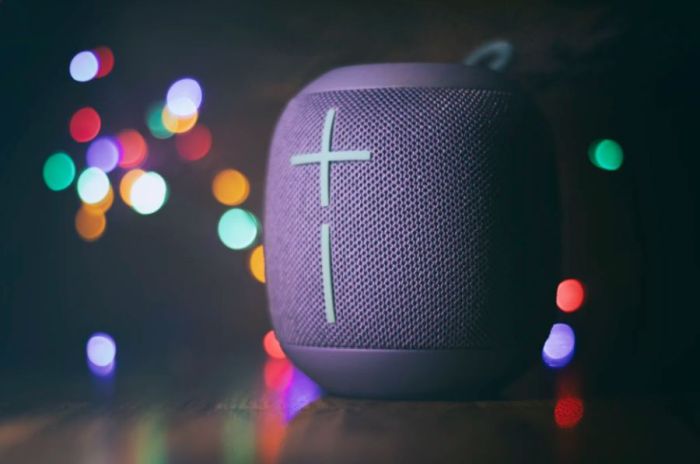
The world of portable audio is brimming with choices, and selecting the perfect Bluetooth speaker can feel overwhelming. From compact travel companions to powerful home systems, the market caters to diverse needs and budgets. This guide navigates the complexities, offering a clear path to finding the ideal speaker for your listening preferences and lifestyle.
We’ll explore key features like battery life, water resistance, and sound quality, comparing different speaker types and technologies to help you make an informed decision. Understanding the nuances of frequency response, codec compatibility, and even speaker placement will empower you to choose a device that delivers exceptional audio performance.
Understanding Bluetooth Speaker Types
Choosing the right Bluetooth speaker depends heavily on understanding the different types available and their intended use cases. The primary categories – portable, home, and soundbar – each offer distinct features and performance characteristics catering to specific needs and listening environments. Understanding these differences is crucial for making an informed purchase.
Portable, home, and soundbar Bluetooth speakers represent distinct design philosophies optimized for different uses. Portable speakers prioritize portability and battery life, often sacrificing some sound quality for convenience. Home speakers, on the other hand, emphasize sound quality and features, typically at the expense of portability. Soundbars, designed for integration with televisions, focus on a slim profile and immersive audio for movie and TV viewing.
Bluetooth Speaker Classifications
The three main categories of Bluetooth speakers—portable, home, and soundbar—each serve a specific purpose. Portable speakers are compact and battery-powered, ideal for outdoor use or on-the-go listening. Home speakers are generally larger and designed for stationary use, offering higher sound quality and more robust features. Soundbars are specifically designed to enhance the audio experience of televisions, providing a more immersive soundscape for movies and shows.
The choice depends heavily on the user’s priorities: portability versus sound quality, and the listening environment.
Bluetooth Speaker Technologies: aptX and AAC
Different Bluetooth codecs impact audio quality. aptX and AAC are two prominent examples. aptX, developed by Qualcomm, is known for its high-quality audio transmission, offering better fidelity than standard SBC (Subband Codec). AAC (Advanced Audio Coding), widely used by Apple devices, also provides improved sound quality compared to SBC. While both offer superior audio to the basic SBC codec, aptX generally boasts slightly higher bitrates and a wider frequency range, resulting in a richer and more detailed sound.
The choice between them often depends on device compatibility, as not all devices support both codecs. For instance, an Android phone might favor aptX, while an iPhone would benefit from AAC. The listener will experience a noticeable difference in clarity and detail when comparing audio streamed via aptX or AAC versus standard SBC.
Speaker Design and Sound Quality
Speaker design significantly influences sound quality. Factors like driver size, enclosure type, and the presence of passive radiators contribute to the overall audio experience. Larger drivers generally produce deeper bass, while smaller drivers are better suited for higher frequencies. Closed-back enclosures provide a more controlled sound, minimizing unwanted resonances, whereas ported enclosures enhance bass response. Passive radiators, often found in compact speakers, help to extend bass frequencies without requiring a large woofer.
For example, a speaker with a large woofer in a ported enclosure will generally offer a more powerful and impactful bass response compared to a smaller speaker with a closed-back design. Similarly, a speaker with multiple drivers (tweeters for high frequencies, mid-range drivers, and woofers for low frequencies) will typically deliver a more balanced and detailed sound than a speaker with a single full-range driver.
Key Features and Specifications
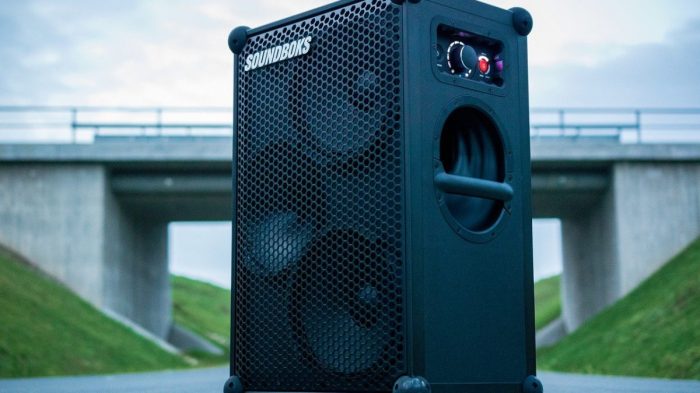
Choosing the right Bluetooth speaker involves understanding its key features and specifications. These factors significantly impact sound quality, usability, and overall value. Paying attention to these details will ensure you select a speaker that perfectly meets your needs and budget.Selecting a Bluetooth speaker requires careful consideration of several crucial aspects beyond just sound quality. These include practical features that affect daily use and longevity, as well as technical specifications that dictate audio performance.
A thorough understanding of these elements is essential for making an informed purchase.
Important Features to Consider
Several features significantly influence a Bluetooth speaker’s practicality and appeal. Battery life determines how long you can use the speaker without recharging, a critical factor for portability. Water resistance protects the speaker from accidental spills or use in damp environments, enhancing its durability. A built-in microphone enables hands-free calling, adding convenience. Other features, such as portability (size and weight), connectivity options (multi-point pairing, NFC), and additional controls (volume, playback) should also be considered.
Technical Specifications and Their Significance
Technical specifications provide a deeper understanding of a Bluetooth speaker’s audio capabilities. Frequency response describes the range of audible frequencies the speaker can reproduce. A wider frequency response generally translates to a richer and more detailed sound. Total Harmonic Distortion (THD) measures the level of distortion in the audio signal; lower THD indicates cleaner, more accurate sound reproduction.
Signal-to-noise ratio (SNR) represents the ratio of the audio signal to background noise; a higher SNR signifies a clearer sound with less background hiss.
Comparison of Top-Rated Bluetooth Speakers
The following table compares specifications of top-rated Bluetooth speakers across different price points. Note that prices are subject to change and availability may vary. This table provides a snapshot of available options, highlighting the trade-offs between features and cost.
| Brand | Model | Price (USD, approximate) | Key Features |
|---|---|---|---|
| Bose | SoundLink Flex | 100-130 | IP67 water and dust resistance, long battery life, compact design |
| JBL | Flip 6 | 100-130 | IP67 water and dust resistance, durable design, powerful sound |
| Ultimate Ears | Boom 3 | 150-180 | 360° sound, IP67 water and dust resistance, long battery life |
| Sonos | Roam | 180-200 | Compact and portable, excellent sound quality, IP67 water and dust resistance, integrates with Sonos ecosystem |
| Marshall | Tufton | 300-400 | Durable, retro design, powerful sound, long battery life |
Sound Quality and Performance
Achieving high-fidelity audio from a portable Bluetooth speaker requires a careful balance of several key components and design choices. Understanding these factors allows you to make informed decisions when selecting a speaker that meets your specific listening preferences. The interplay between driver size, amplifier power, and enclosure design significantly impacts the overall sound quality and performance.The sound quality of a Bluetooth speaker is determined by a complex interplay of several factors.
Let’s examine the most significant contributors.
Driver Size and Type
The speaker driver is the component responsible for converting electrical signals into sound waves. Larger drivers generally produce deeper bass frequencies due to their increased surface area and ability to move more air. However, larger drivers often compromise portability. Different driver materials, such as paper, polypropylene, or silk, also affect the sound signature, with each material exhibiting unique tonal characteristics.
For example, silk dome tweeters are often praised for their smooth, detailed high-frequency response, while paper cones might offer a warmer, more natural sound. The number of drivers also plays a role; systems with multiple drivers (e.g., a woofer for bass and a tweeter for treble) can offer a more balanced and detailed soundstage compared to single-driver speakers.
Amplifier Power and Efficiency
The amplifier is the component that boosts the audio signal from your device to the speaker driver. Higher amplifier power generally translates to louder volume and greater dynamic range, allowing the speaker to reproduce both quiet and loud passages with clarity. However, amplifier efficiency is equally important. A more efficient amplifier will produce less heat and consume less power, leading to longer battery life.
Class D amplifiers are known for their high efficiency and are commonly found in portable Bluetooth speakers.
Enclosure Design and Material
The speaker enclosure plays a crucial role in shaping the sound. The size, shape, and materials used in the enclosure can significantly affect bass response, clarity, and overall sound quality. A well-designed enclosure can enhance bass response by creating resonance within the enclosure, while a poorly designed enclosure can lead to muddy or distorted bass. Materials like wood are often preferred for their ability to dampen vibrations and produce a warmer sound compared to plastic enclosures.
The addition of passive radiators, which are essentially bass enhancement drivers without their own amplifiers, further enhances low-frequency response in smaller enclosures.
Sound Profile Comparisons
Different speaker types exhibit distinct sound profiles. Bass-heavy speakers prioritize low-frequency reproduction, often at the expense of mid-range clarity and high-frequency detail. These are popular for genres like hip-hop or electronic music where powerful bass is a key element. Balanced speakers aim for a more even distribution of frequencies across the entire audio spectrum, offering a more neutral and accurate representation of the original recording.
This is suitable for a wider range of musical genres and listening preferences. Bright speakers emphasize high frequencies, resulting in a crisp, detailed sound, but potentially at the expense of warmth in the lower frequencies.
Speaker Placement and its Impact on Sound Quality
Let’s consider a scenario: Imagine a small, portable Bluetooth speaker placed on a soft surface like a bed. The sound will be muffled and the bass response will be significantly reduced due to the absorption of sound waves by the soft material. Now, imagine the same speaker placed on a hard, flat surface like a table, away from walls.
The sound will be clearer and the bass will be more pronounced, as the hard surface reflects sound waves and reduces absorption. Furthermore, positioning the speaker away from walls and corners prevents sound reflections from muddying the audio and creating unwanted resonances. Optimal placement minimizes these negative effects, leading to a more accurate and enjoyable listening experience.
Experimentation with placement is key to optimizing sound quality for any given listening environment.
Connectivity and Compatibility
Seamless connectivity and broad compatibility are crucial for a positive Bluetooth speaker experience. Understanding the nuances of Bluetooth versions and codecs ensures you select a speaker that works flawlessly with your devices and delivers optimal audio quality. This section will explore the various aspects of Bluetooth connectivity and compatibility to help you make an informed decision.
Bluetooth technology, while seemingly simple, has evolved significantly over the years. Different versions offer varying levels of performance, particularly regarding range, data transfer speed, and power consumption. Codec compatibility, on the other hand, determines the quality of the audio transmitted wirelessly.
Bluetooth Versions and Their Impact
Different Bluetooth versions offer distinct advantages. Older versions, like Bluetooth 2.1 and 3.0, are less efficient and offer shorter ranges than newer versions. Bluetooth 4.0 introduced low-energy (LE) technology, significantly improving battery life and extending range for smaller devices. Bluetooth 5.0 and 5.3 boast further improvements in speed, range, and power efficiency. For example, Bluetooth 5.0 offers up to double the speed and four times the range of Bluetooth 4.2.
Choosing a speaker with a more recent Bluetooth version generally translates to a better user experience with increased range and stability. However, it’s important to note that the actual range can vary depending on environmental factors like walls and interference.
Common Bluetooth Speaker Connection Issues and Troubleshooting
Several factors can hinder a Bluetooth speaker’s connection. Understanding these common issues and their solutions can save you frustration.
Below is a list of common connection problems and their troubleshooting steps:
- Issue: Speaker not discoverable. Solution: Ensure the speaker is powered on and in pairing mode (usually indicated by a flashing light). Check your device’s Bluetooth settings to ensure it’s scanning for devices.
- Issue: Intermittent connection drops. Solution: Move closer to the speaker, eliminate sources of interference (other Bluetooth devices, microwaves, etc.), or check for obstructions between the speaker and your device. Consider restarting both devices.
- Issue: Poor audio quality. Solution: Check for codec compatibility (discussed below). Ensure the speaker’s firmware is up-to-date. Try pairing with a different device to rule out issues with the source device.
- Issue: Unable to connect to multiple devices simultaneously. Solution: Check the speaker’s specifications to see if it supports multipoint pairing. If not, you will need to disconnect one device before connecting another.
- Issue: Speaker is connected but no sound. Solution: Check the volume on both the speaker and your source device. Ensure the correct output device is selected on your source device. Try restarting both devices.
Codec Compatibility and Its Importance
Codecs are audio compression algorithms that dictate the quality of audio transmitted wirelessly via Bluetooth. Different codecs offer varying levels of compression and audio fidelity. Common codecs include SBC (Subband Codec), AAC (Advanced Audio Coding), aptX, and aptX HD. SBC is a standard codec supported by most devices, but it offers lower audio quality compared to others.
AAC offers better quality than SBC, while aptX and aptX HD provide even higher fidelity with lower latency.
It is crucial that both your Bluetooth speaker and your source device (phone, computer, etc.) support the same codec for optimal sound quality. If the devices are not compatible, the speaker will default to a lower-quality codec, resulting in a compromised listening experience. For example, if your speaker supports aptX HD but your phone only supports SBC, the speaker will fall back to SBC, limiting the potential audio quality.
Always check the specifications of both your speaker and your source device to ensure codec compatibility for the best possible sound.
Budget and Value
Choosing a Bluetooth speaker often involves balancing desired features with budget constraints. Understanding the relationship between price and performance is crucial for making an informed decision. A higher price doesn’t always guarantee superior sound, but it often indicates better components, more advanced technology, and potentially longer lifespan. Conversely, budget-friendly options can still deliver surprisingly good audio experiences, especially for casual listening.Finding the right balance requires careful consideration of your needs and listening habits.
This section explores how to determine a suitable budget and examines the value proposition of speakers across different price ranges.
Budget Determination Based on Needs and Usage
The appropriate budget for a Bluetooth speaker depends heavily on how you intend to use it. For occasional use, such as background music while working or a small gathering, a budget of $30-$50 might suffice. Speakers in this range often provide decent sound quality and sufficient volume for smaller spaces. However, for more demanding applications, such as outdoor parties or critical listening sessions, a higher budget – $100-$200 or more – would be necessary to obtain speakers with enhanced features like superior bass response, longer battery life, and higher water resistance.
Consider factors like portability needs (a compact speaker for travel vs. a larger, more powerful speaker for home use), desired sound quality (crisp highs and clear mids versus powerful bass), and expected usage frequency (daily use vs. occasional use). Investing in a higher-priced speaker makes more sense if you’ll use it frequently in demanding environments, while a budget-friendly option is suitable for occasional, less demanding use.
Examples of Budget-Friendly Bluetooth Speakers with Good Value
Several brands offer excellent value in the budget-friendly range. For instance, Anker Soundcore models consistently receive positive reviews for their sound quality relative to their price. Many Anker models in the $30-$50 range provide surprisingly good bass and clear treble, making them suitable for casual listening and smaller gatherings. JBL’s Clip series also offers portable, waterproof speakers with decent sound at a similar price point.
These compact speakers are ideal for outdoor activities or use in bathrooms. It’s important to remember that while these speakers might not match the audio fidelity of high-end models, they often provide a satisfying listening experience for everyday use. Reading user reviews and comparing specifications before purchasing is crucial to ensure you’re getting the best value for your money.
Feature and Performance Comparison Across Price Points
The difference in features and performance between budget and premium Bluetooth speakers is significant. Budget speakers often prioritize portability and simplicity, sacrificing features like advanced noise cancellation, multiple driver configurations for enhanced sound, or extensive connectivity options. Mid-range speakers ($100-$200) typically incorporate better drivers, potentially including subwoofers for enhanced bass, offering improved sound quality and louder volume. Higher-end speakers ($200+) frequently boast features like advanced digital signal processing (DSP) for refined audio tuning, superior build quality with premium materials, and longer battery life.
They might also include more advanced connectivity options, such as multi-point pairing or support for high-resolution audio codecs. Ultimately, the choice depends on your priorities. If portability and basic functionality are your main concerns, a budget speaker might be sufficient. If you desire enhanced sound quality, durability, and advanced features, a higher-priced speaker will be a better investment.
Additional Considerations
Choosing the right Bluetooth speaker involves more than just comparing specs; understanding the nuances of reviews, brand reputation, and intended use significantly impacts your purchase decision. Careful consideration of these factors ensures a speaker that meets your needs and provides lasting value.
Beyond the technical specifications, several other factors play a crucial role in selecting the best Bluetooth speaker for your needs. These additional considerations can significantly influence your overall satisfaction with the product.
Customer Reviews
Customer reviews provide invaluable insights into the real-world performance and user experience of a Bluetooth speaker. Reading multiple reviews from various sources helps identify common issues, assess the accuracy of manufacturer claims, and gain a balanced perspective on the product’s strengths and weaknesses. Pay close attention to reviews that discuss aspects like battery life, sound quality in different environments, and the durability of the speaker’s construction.
For example, a consistently negative feedback regarding a particular speaker’s susceptibility to water damage should be a significant factor in your decision-making process, even if other aspects seem positive.
Speaker Brand Analysis
Different brands cater to different market segments and prioritize different features. Established brands like Bose and JBL are known for their consistent quality and reliable performance, often commanding a higher price point. However, newer brands offer competitive features at more affordable prices, though their long-term reliability might be less established. For instance, JBL often emphasizes durability and powerful bass, while Bose prioritizes clear audio reproduction and noise cancellation, making them suitable for different user preferences.
Understanding these brand-specific characteristics is crucial in aligning your needs with the appropriate product.
Intended Use and Speaker Selection
The ideal Bluetooth speaker varies significantly depending on its intended use. A portable speaker for personal listening might prioritize compact size, battery life, and decent sound quality, while a speaker for outdoor parties requires ruggedness, louder volume, and potentially water resistance. For example, a small, lightweight speaker like the Anker Soundcore Flare 2 is perfect for personal listening or taking to the beach, while a larger, more powerful speaker like the JBL Xtreme 3 is more suitable for outdoor parties.
Choosing a speaker based on its intended application ensures you invest in the right features and capabilities.
Electronic Telephone Systems (Unrelated, as requested)
Electronic telephone systems, primarily Private Branch eXchanges (PBXs), form the backbone of internal communication within organizations. They manage calls within a company network and connect to the public switched telephone network (PSTN) for external calls. Understanding their architecture and functionality is crucial for effective communication management.PBX Architecture typically involves a central switching unit that manages all call routing and features.
This unit connects to various telephone lines, both internal and external, and utilizes various protocols for communication. The system may include features like voicemail, call forwarding, conferencing, and automated attendant services. The architecture can range from simple systems for small businesses to complex, multi-site systems for large corporations, often integrating with other communication technologies.
PBX System Types and Features
Different types of PBX systems cater to diverse organizational needs and budgets. Key features vary significantly based on the system’s capabilities and intended user base. For instance, a small business might use a basic key telephone system with limited features, while a large corporation might employ a sophisticated IP-PBX with advanced call management and integration capabilities.
Comparison of VoIP and Traditional PBX Systems
VoIP (Voice over Internet Protocol) systems and traditional PBX systems offer distinct approaches to telephone communication. Traditional PBX systems rely on dedicated telephone lines and physical infrastructure, while VoIP systems utilize internet connectivity to transmit voice data as digital packets. Traditional PBX systems generally offer higher call quality in areas with unreliable internet access but require more significant upfront investment in hardware.
VoIP systems, conversely, are more scalable and cost-effective in the long run, offering features like mobility and integration with other communication platforms. However, VoIP systems’ performance is heavily reliant on a stable internet connection and can be susceptible to latency and jitter issues. The choice between a VoIP system and a traditional PBX depends heavily on the specific needs and infrastructure of the organization, weighing factors like budget, scalability, call quality requirements, and IT infrastructure.
Choosing the right Bluetooth speaker is a journey of discovery, balancing your needs with the available options. By considering factors such as sound quality, connectivity, budget, and intended use, you can confidently select a device that enhances your listening experience for years to come. Remember to read reviews and compare specifications to ensure your investment aligns perfectly with your expectations.
Happy listening!
Expert Answers
What is the difference between aptX and AAC codecs?
aptX and AAC are audio codecs that compress and decompress audio data for Bluetooth transmission. aptX generally offers higher fidelity than AAC, resulting in better sound quality, but requires both the speaker and source device to support it.
How often should I charge my Bluetooth speaker?
Charging frequency depends on usage and battery capacity. Check your speaker’s manual for recommended charging practices, but generally, you should recharge when the battery indicator shows a low level.
Can I use my Bluetooth speaker with my TV?
Most TVs have Bluetooth capabilities, but compatibility can vary. Check your TV’s specifications and your speaker’s manual to ensure compatibility. You might need an additional Bluetooth adapter in some cases.
How do I improve the bass response of my Bluetooth speaker?
Experiment with speaker placement. Positioning the speaker away from walls or corners can often improve bass response. Additionally, consider the environment; a smaller room may naturally enhance bass more than a larger one.


