
The rise of VoIP has revolutionized communication, offering cost-effective and flexible solutions. However, this technological advancement brings new security challenges. Unlike traditional phone lines, VoIP systems are susceptible to various cyber threats, from eavesdropping to denial-of-service attacks. Understanding these vulnerabilities and implementing robust security measures is crucial to protecting sensitive business information and maintaining operational continuity.
This guide explores a comprehensive approach to securing your VoIP telephone system, covering network infrastructure, device security, monitoring practices, and advanced techniques. Whether you’re a small business or a large enterprise, understanding and implementing these strategies is vital for safeguarding your communications and maintaining a secure operational environment.
Understanding VoIP Security Risks
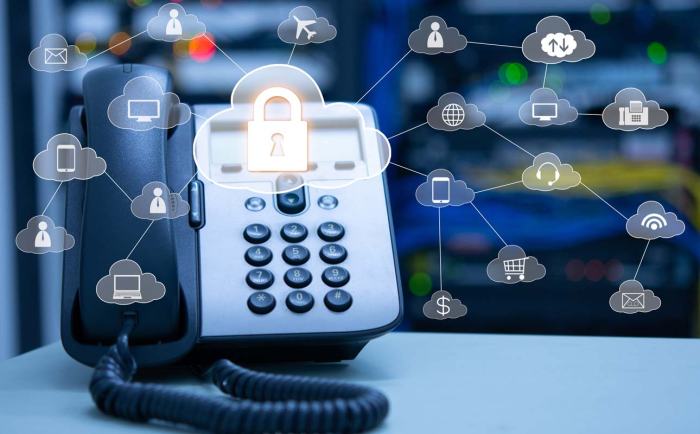
VoIP, while offering significant cost and flexibility advantages over traditional phone systems, introduces a new set of security challenges. Unlike traditional phone lines which rely on physically secure infrastructure, VoIP relies heavily on internet protocols, making it vulnerable to a wider range of attacks. Understanding these vulnerabilities is crucial for implementing effective security measures.VoIP systems are susceptible to several security threats due to their reliance on internet protocols and digital data transmission.
These threats differ significantly from those faced by traditional phone systems, which rely on physical infrastructure and analog signals. The inherent vulnerabilities of VoIP stem from its reliance on IP networks, making it susceptible to various cyberattacks.
VoIP Vulnerabilities Compared to Traditional Phone Lines
Traditional phone systems, using circuit-switched networks, offer inherent security due to their physical infrastructure and analog signal transmission. Eavesdropping requires physical access to the lines, and denial-of-service attacks are significantly more difficult to execute. In contrast, VoIP systems transmit voice data as packets over IP networks, making them vulnerable to a range of cyberattacks such as packet sniffing, man-in-the-middle attacks, and denial-of-service attacks.
Data breaches are also a significant concern, as sensitive voice data is stored and transmitted digitally. The lack of end-to-end encryption in many VoIP systems further exacerbates these risks.
Common Attack Vectors Targeting VoIP
Several common attack vectors exploit the vulnerabilities inherent in VoIP systems. Denial-of-service (DoS) attacks flood the VoIP system with traffic, rendering it unavailable to legitimate users. This can disrupt business operations and cause significant financial losses. Eavesdropping, facilitated by packet sniffing or man-in-the-middle attacks, allows unauthorized individuals to intercept and listen to private conversations. These attacks can compromise sensitive business information or personal data, leading to reputational damage or legal repercussions.
Furthermore, unauthorized access to VoIP systems can allow attackers to make unauthorized calls, incurring substantial costs or using the system for malicious purposes such as phishing campaigns.
Security Challenges Posed by Different VoIP Deployment Models
The security challenges associated with VoIP vary depending on the deployment model. Cloud-based VoIP solutions, while offering scalability and cost-effectiveness, rely on third-party providers for security. This introduces a reliance on the provider’s security infrastructure and practices. On-premises VoIP deployments, while offering greater control over security, require significant investment in infrastructure and expertise to maintain a secure environment.
Both models require robust security measures to mitigate the risks associated with VoIP. A thorough risk assessment is crucial in selecting the most appropriate deployment model based on specific security requirements and resources.
Comparison of VoIP Security Threats, Vulnerabilities, Impacts, and Mitigation Strategies
| Threat | Vulnerability | Impact | Mitigation Strategy |
|---|---|---|---|
| Denial-of-Service (DoS) Attack | IP network vulnerabilities, lack of sufficient bandwidth | System unavailability, business disruption, financial losses | Implement robust firewalls, use DDoS mitigation services, sufficient bandwidth provisioning |
| Eavesdropping | Lack of encryption, vulnerable network infrastructure | Data breach, loss of confidentiality, reputational damage | Utilize strong encryption (SRTP/TLS), secure network configuration, regular security audits |
| Unauthorized Access | Weak passwords, lack of authentication, vulnerable endpoints | Unauthorized calls, data breaches, malicious activities | Strong password policies, multi-factor authentication, regular software updates, endpoint security |
| Man-in-the-Middle (MitM) Attack | Lack of encryption, insecure network connections | Data interception, manipulation of calls, identity theft | Utilize VPNs, strong encryption protocols, regular security assessments |
Implementing Secure VoIP Network Infrastructure
Securing your VoIP system necessitates a robust and well-planned network infrastructure. This involves careful consideration of network architecture, access controls, and the implementation of appropriate security protocols. A layered approach, combining multiple security measures, is crucial for mitigating risks and protecting your communications.A secure VoIP network architecture relies on several key components working together to protect against threats.
This section details the essential elements and best practices for building a resilient and secure VoIP system.
Secure Network Architecture Design
A secure VoIP network architecture begins with segmentation. Dividing your network into distinct segments – for example, separating the VoIP system from other network functions – limits the impact of a security breach. Firewalls act as the gatekeepers, controlling network traffic and blocking unauthorized access. Intrusion Detection/Prevention Systems (IDS/IPS) monitor network activity for malicious patterns, alerting administrators to potential threats and automatically blocking or mitigating attacks.
Virtual Private Networks (VPNs) encrypt communication between remote users and the VoIP system, ensuring confidentiality even when using public networks. Implementing a robust and well-configured demilitarized zone (DMZ) can also be beneficial, housing publicly accessible VoIP services while isolating them from the internal network.
Strong Passwords and Multi-Factor Authentication
Employing strong, unique passwords for all VoIP accounts is paramount. These passwords should be complex, combining uppercase and lowercase letters, numbers, and symbols. Regular password changes are also recommended. However, relying solely on passwords is insufficient. Multi-factor authentication (MFA) adds an extra layer of security by requiring users to provide a second form of authentication, such as a one-time code generated by an authenticator app or a security token.
This significantly reduces the risk of unauthorized access, even if passwords are compromised. Consider implementing MFA for all administrative and high-privilege VoIP accounts.
Router and Switch Configuration Best Practices
Routers and switches form the backbone of your network. Their configuration directly impacts VoIP security. Begin by disabling unnecessary services and ports on your routers and switches. Regular firmware updates are crucial to patch known vulnerabilities. Implement access control lists (ACLs) to restrict access to VoIP devices and networks.
VLANs (Virtual LANs) provide another layer of segmentation, isolating VoIP traffic from other network segments. Regularly monitor and review router and switch logs for suspicious activity. Consider using Quality of Service (QoS) features to prioritize VoIP traffic, ensuring reliable call quality even under heavy network load.
Essential Security Protocols
Implementing appropriate security protocols is crucial for securing VoIP communications. These protocols provide confidentiality, integrity, and authentication.
- SRTP (Secure Real-time Transport Protocol): SRTP encrypts and authenticates media streams in VoIP calls, protecting the conversation’s content from eavesdropping and tampering.
- TLS (Transport Layer Security): TLS secures the signaling traffic between VoIP clients and servers, protecting the call setup and teardown process from interception and manipulation. This is particularly important for SIP (Session Initiation Protocol) signaling.
- HTTPS (Hypertext Transfer Protocol Secure): HTTPS secures web-based VoIP management interfaces, protecting administrative access and configuration data from unauthorized access.
Securing VoIP Devices and Endpoints
Securing your VoIP devices and endpoints is crucial for maintaining the confidentiality, integrity, and availability of your communications. These devices represent potential entry points for attackers, and their vulnerabilities can compromise your entire VoIP system. Understanding the specific security risks associated with each type of device and implementing appropriate mitigation strategies is paramount.Different VoIP devices present unique security challenges.
Desk phones, softphones, and gateways all have specific vulnerabilities that require tailored security approaches. Failing to address these vulnerabilities can lead to unauthorized access, eavesdropping, data breaches, and denial-of-service attacks.
VoIP Device Security Implications and Mitigation Strategies
Desk phones, while seemingly simple, can be vulnerable to physical tampering, malware infections via USB ports (if present), and unauthorized access through default credentials. Softphones, being software applications, are susceptible to vulnerabilities in the application itself or the underlying operating system. Gateways, which connect your VoIP network to the PSTN (Public Switched Telephone Network), are critical points of vulnerability and can be targeted for denial-of-service attacks or unauthorized access to your network.
Mitigation strategies include strong password policies, regular firmware updates, disabling unnecessary features, and employing network segmentation to isolate VoIP traffic. Physical security measures, such as securing desk phones in locked offices, are also important for preventing tampering.
Secure Configuration of VoIP Devices
Securely configuring VoIP devices involves a multi-faceted approach that encompasses firmware updates, access control, and network security best practices. Regular firmware updates are essential for patching known vulnerabilities and enhancing security features. Access control mechanisms, such as strong passwords and role-based access control (RBAC), restrict unauthorized access to device settings and functionalities. Furthermore, implementing network security measures, such as firewalls and intrusion detection/prevention systems (IDS/IPS), protects the VoIP network from external threats.
Securing Softphones on Various Operating Systems
Softphones, while offering flexibility, require careful configuration to ensure security. The security measures depend on the operating system and the softphone application used. The following steps Artikel a secure configuration process.
- Install from Reputable Sources: Download the softphone application only from official websites or trusted app stores to avoid malware-infected versions.
- Strong Passwords and Multi-Factor Authentication (MFA): Use strong, unique passwords for your softphone accounts and enable MFA whenever possible to add an extra layer of security.
- Regular Updates: Keep the softphone application and the underlying operating system updated with the latest security patches.
- Firewall Configuration: Configure your operating system’s firewall to allow only necessary network traffic for the softphone application.
- Secure Network Connection: Use a secure network connection, such as a VPN, especially when using a softphone on a public Wi-Fi network.
- Disable Unnecessary Features: Disable any features not required for normal operation to reduce the attack surface.
- Regular Security Audits: Periodically review the security settings of your softphone and update them as needed.
Managing and Monitoring VoIP Security
Proactive management and consistent monitoring are crucial for maintaining the security of your VoIP system. A robust security posture isn’t a one-time setup; it requires ongoing attention and adaptation to emerging threats. This involves regular security assessments, vigilant monitoring of system activity, and a well-defined incident response plan.Regular security audits and penetration testing provide a systematic way to identify vulnerabilities before malicious actors can exploit them.
Logging and monitoring VoIP traffic allows for the detection of suspicious activities, enabling prompt responses to potential threats. A comprehensive incident response plan minimizes the impact of a security breach, ensuring business continuity and data protection.
Regular Security Audits and Penetration Testing
Implementing regular security audits and penetration testing is vital for identifying vulnerabilities in your VoIP system. Security audits involve a systematic examination of your system’s configuration, policies, and procedures to identify weaknesses. Penetration testing simulates real-world attacks to assess the effectiveness of your security measures and identify exploitable vulnerabilities. A combination of both provides a comprehensive security assessment.
Audits should be conducted at least annually, with penetration testing performed at least twice a year or more frequently depending on your risk tolerance and industry regulations. The frequency should increase if significant changes are made to the VoIP infrastructure. For example, a company implementing a new VoIP platform should conduct a thorough security audit and penetration test before and after the transition.
Results from these tests should be meticulously documented and used to inform improvements in security practices.
VoIP Traffic Logging and Monitoring
Logging and monitoring VoIP traffic are essential for detecting and responding to suspicious activity. This involves collecting and analyzing data related to VoIP calls, including call details, timestamps, source and destination IP addresses, and other relevant metadata. Real-time monitoring systems can alert administrators to unusual patterns or anomalies, such as a sudden surge in calls from an unknown location or unusual call durations.
These systems often utilize anomaly detection algorithms to identify deviations from established baselines. For instance, a sudden increase in failed login attempts from a specific IP address could indicate a brute-force attack. Proper logging practices ensure that you have a detailed record of events, which is crucial for incident investigation and forensic analysis.
VoIP Security Incident Response
A well-defined incident response plan is crucial for minimizing the impact of a VoIP security breach. This plan should Artikel clear procedures for identifying, containing, eradicating, recovering from, and learning from security incidents. The plan should include roles and responsibilities for different team members, communication protocols, and escalation procedures. It’s important to test the plan regularly through simulations to ensure its effectiveness.
Consider a scenario where unauthorized access is detected on a VoIP system. The incident response plan should guide the team through steps such as isolating the affected system, identifying the source of the breach, restoring data backups, and strengthening security measures to prevent future incidents. Regular training for staff on the incident response plan is crucial to ensure everyone knows their role and responsibilities.
VoIP Security Incident Response Flowchart
A flowchart visually represents the steps involved in responding to a VoIP security incident.[Imagine a flowchart here. The flowchart would begin with “Incident Detection” and branch to “Verify Incident,” then to “Contain the Incident,” followed by “Eradicate the Threat,” “Recover Systems,” “Post-Incident Activity (Analysis and Reporting),” and finally “Lessons Learned and Improvements”. Each step would have detailed sub-steps described in the incident response plan.] For example, “Contain the Incident” might involve isolating the affected system from the network, changing passwords, and disabling affected accounts.
“Eradicate the Threat” might involve removing malware, patching vulnerabilities, and updating security software. “Recover Systems” might include restoring data from backups and verifying system functionality. “Post-Incident Activity” would involve analyzing logs, identifying root causes, and creating reports. “Lessons Learned and Improvements” would focus on implementing preventative measures to avoid similar incidents in the future.
Electronic Telephone Systems
Understanding the security implications of different telephone systems is crucial for businesses of all sizes. This section compares the security features of traditional Private Branch Exchange (PBX) systems with modern Voice over Internet Protocol (VoIP) systems, examines the specific security considerations of legacy systems, and highlights vulnerabilities in hybrid setups. Finally, we will discuss the challenges involved in migrating from legacy systems to secure VoIP solutions.Traditional PBX systems, while seemingly simple, present a different set of security challenges compared to their VoIP counterparts.
Their closed, proprietary nature can make them difficult to update and patch against newly discovered vulnerabilities, potentially leaving them exposed to various threats. VoIP systems, while offering greater flexibility and features, introduce new attack vectors due to their reliance on internet connectivity. The security of each system hinges on proper configuration, ongoing maintenance, and a robust security strategy.
Comparison of Security Features in Traditional PBX and VoIP Systems
Traditional PBX systems typically rely on physical security measures and internal network segmentation for protection. Their security is often tied to the physical location and access controls of the PBX itself. Unauthorized access is typically limited to physical tampering or gaining access to internal network segments. However, these systems are often less flexible when it comes to implementing advanced security features such as encryption or call recording.
Modern VoIP systems, on the other hand, offer a wider range of security features, including encryption protocols (like SRTP and TLS), authentication mechanisms, and advanced call management features. However, these features require proper configuration and ongoing management to be effective. A misconfigured VoIP system can be significantly more vulnerable than a properly secured traditional PBX. The reliance on internet connectivity also introduces vulnerabilities associated with network security, such as denial-of-service attacks and man-in-the-middle attacks.
Security Considerations for Legacy Electronic Telephone Systems
Many organizations still operate legacy electronic telephone systems. These systems often lack the advanced security features found in modern VoIP or even newer PBX systems. They are particularly vulnerable to outdated hardware and software, making them susceptible to known vulnerabilities. Lack of regular updates and patches increases the risk of exploitation. Additionally, securing these systems often requires specialized knowledge and maintenance, which can be costly and difficult to find.
Physical security of the system is paramount, as unauthorized access to the physical equipment can compromise the entire system. Implementing robust access controls, regular security audits, and potentially replacing the system altogether are key considerations for securing legacy systems.
Vulnerabilities in Hybrid Systems
Hybrid systems, which combine traditional PBX and VoIP technologies, introduce a unique set of security challenges. The integration point between the two systems becomes a potential vulnerability. If not properly secured, this integration point can allow attackers to exploit weaknesses in either system to gain access to the entire network. Maintaining consistent security policies and practices across both systems is critical to mitigating this risk.
Careful planning and implementation of security measures at the integration point, including robust firewalls and access controls, are essential.
Challenges of Migrating from Legacy Systems to Secure VoIP Solutions
Migrating from legacy electronic telephone systems to secure VoIP solutions can be a complex undertaking. The process involves significant planning, investment, and potential disruption to business operations. Organizations need to carefully assess their current infrastructure, security requirements, and budget before embarking on a migration. Compatibility issues between existing systems and new VoIP equipment need to be addressed.
Thorough testing and training are crucial to ensure a smooth transition and minimize disruptions. The migration also requires addressing potential security risks during the transition period, ensuring that the existing legacy system remains secure until the new VoIP system is fully operational and tested. A phased approach, migrating in stages, is often recommended to mitigate risks and ensure a successful transition.
Advanced VoIP Security Measures
Implementing basic VoIP security measures is crucial, but for robust protection against sophisticated threats, advanced strategies are necessary. These measures go beyond foundational security practices and leverage more complex technologies and methodologies to enhance overall system resilience. This section explores several key advanced techniques.
Security Information and Event Management (SIEM) Systems in VoIP Security
SIEM systems play a vital role in proactively identifying and responding to security threats within a VoIP infrastructure. By collecting and correlating logs from various sources, including VoIP platforms, network devices, and security tools, SIEM systems provide a centralized view of network activity. This allows security analysts to detect anomalies, such as unusual call patterns or unauthorized access attempts, that might indicate a security breach.
Effective SIEM deployment enables quicker incident response, minimizing potential damage and downtime. For example, a SIEM system could detect a sudden surge in calls originating from an unusual geographic location, triggering an alert and allowing for immediate investigation and mitigation.
Network Segmentation to Isolate VoIP Traffic
Network segmentation involves dividing a network into smaller, isolated segments to limit the impact of a security breach. By isolating VoIP traffic on a separate VLAN (Virtual LAN), organizations can prevent attackers from accessing other sensitive network resources even if they compromise the VoIP system. This approach reduces the attack surface and minimizes the potential for lateral movement within the network.
For instance, a compromised VoIP phone on a segmented network would only affect the VoIP segment, leaving other critical systems unaffected. Properly configured firewalls and access control lists further enhance the effectiveness of network segmentation.
Securing VoIP Communication in a Bring-Your-Own-Device (BYOD) Environment
BYOD environments present unique security challenges due to the variety of devices and operating systems used. Securing VoIP communication in such an environment requires a multi-layered approach. This includes implementing strong authentication mechanisms like multi-factor authentication (MFA), enforcing device security policies (e.g., requiring device encryption and regular software updates), and utilizing mobile device management (MDM) solutions to remotely manage and monitor devices.
Regular security awareness training for employees is also crucial to educate users about potential threats and best practices for secure device usage. For example, enforcing a policy that only allows company-approved VoIP applications on BYOD devices significantly reduces the risk of using vulnerable or malicious applications.
Advanced Encryption Techniques in Securing VoIP Calls
Several advanced encryption techniques are used to secure VoIP calls, offering varying levels of protection. SRTP (Secure Real-time Transport Protocol) is a widely adopted standard that provides confidentiality and integrity for VoIP communications by encrypting the media stream. SRTP uses AES (Advanced Encryption Standard) for encryption and provides authentication through message authentication codes (MACs). While SRTP offers strong security, its effectiveness depends on proper implementation and key management.
TLS (Transport Layer Security) can also be used to secure the signaling portion of VoIP calls, protecting the control information exchanged between endpoints. Both SRTP and TLS are essential components of a secure VoIP infrastructure, providing comprehensive protection against eavesdropping and tampering. However, limitations exist, particularly with the potential for vulnerabilities in the implementation or the compromise of encryption keys.
The choice of encryption method depends on the specific security requirements and the capabilities of the VoIP system.
VoIP Security Best Practices for Small and Medium Businesses (SMBs)
Securing a VoIP system for a small or medium-sized business (SMB) requires a balanced approach. It’s crucial to implement robust security measures without incurring excessive costs or overwhelming the IT team. This section Artikels a simplified security plan, focusing on practicality and cost-effectiveness for SMBs.Implementing a comprehensive security plan doesn’t require extensive technical expertise or a large budget.
A layered approach, combining several relatively simple strategies, can significantly enhance VoIP security for SMBs. This approach focuses on prioritizing the most critical vulnerabilities and implementing cost-effective solutions to address them.
Simplified Security Plan for SMB VoIP Deployments
This plan prioritizes ease of implementation and cost-effectiveness. It focuses on essential security measures that provide a strong foundation for protecting a VoIP system. The plan is designed to be adaptable to various SMB needs and resources. The core components are strong passwords, regular updates, firewall configuration, and employee training.
Common Security Threats Facing SMBs Using VoIP and Mitigation Strategies
SMBs are particularly vulnerable to several common VoIP security threats. These threats can lead to significant financial losses, reputational damage, and operational disruptions. Effective mitigation strategies are essential to protect against these risks. Understanding these threats and implementing appropriate countermeasures is crucial for safeguarding sensitive business communications.
- Phishing Attacks: Employees are tricked into revealing login credentials or downloading malware. Mitigation: Implement robust employee training programs focusing on phishing awareness and secure email practices.
- Denial-of-Service (DoS) Attacks: These attacks flood the VoIP system with traffic, rendering it unusable. Mitigation: Utilize a robust firewall with intrusion detection and prevention capabilities. Consider a cloud-based VoIP service that incorporates built-in DDoS protection.
- Man-in-the-Middle (MitM) Attacks: Attackers intercept VoIP calls to eavesdrop or manipulate communication. Mitigation: Use strong encryption protocols like SRTP and ensure all VoIP traffic is routed over a secure network (VPN).
- Unauthorized Access: Hackers gain access to the VoIP system through weak passwords or vulnerabilities in the system. Mitigation: Implement strong password policies, regularly update VoIP software and firmware, and utilize multi-factor authentication where possible.
Essential Security Measures Checklist for SMB VoIP Implementation
Before implementing a VoIP system, SMBs should carefully consider these essential security measures. This checklist provides a framework for a secure deployment. Regular review and updates of these measures are crucial to maintaining a strong security posture.
- Strong Passwords and Authentication: Enforce strong, unique passwords for all VoIP accounts and consider multi-factor authentication.
- Firewall Configuration: Configure the firewall to block unauthorized access to the VoIP system and restrict access to only necessary ports.
- Regular Software and Firmware Updates: Keep all VoIP devices and software updated with the latest security patches.
- Encryption: Utilize encryption protocols such as SRTP to secure VoIP calls.
- Network Segmentation: Isolate the VoIP network from other sensitive business networks.
- Security Audits and Penetration Testing: Conduct regular security audits and penetration testing to identify and address vulnerabilities.
- Incident Response Plan: Develop and regularly test an incident response plan to handle security breaches effectively.
Educating Employees About VoIP Security Best Practices
Employee education is a critical component of a comprehensive VoIP security strategy. Regular training sessions and awareness campaigns can significantly reduce the risk of human error, a major cause of many security breaches. A multi-faceted approach, including interactive training, clear guidelines, and regular reinforcement, is most effective.A combination of methods should be employed. This could include short training videos, regular email reminders, and interactive quizzes to test knowledge retention.
Furthermore, clear, concise guidelines on acceptable use policies and security protocols should be readily available and easily accessible to all employees. Regular refresher courses are essential to ensure that employees remain aware of evolving threats and best practices.
Securing your VoIP system is an ongoing process requiring vigilance and proactive measures. By implementing the strategies Artikeld in this guide – from establishing a secure network infrastructure and regularly updating firmware to employing robust monitoring and incident response plans – you can significantly mitigate the risks associated with VoIP communication. Prioritizing security not only protects sensitive data but also ensures business continuity and maintains the trust of your clients and partners.
Remember, a proactive approach to VoIP security is an investment in your organization’s overall security posture.
Key Questions Answered
What are the common signs of a VoIP security breach?
Signs include unusual call patterns, dropped calls, unauthorized access attempts, compromised user accounts, and unexplained spikes in network traffic.
How often should I update my VoIP system’s firmware?
Firmware updates should be installed as soon as they are released by the vendor to patch known vulnerabilities.
Can I use a consumer-grade router for my VoIP system?
While possible, it’s generally not recommended. Business-grade routers offer enhanced security features and better quality of service for VoIP traffic.
What is the role of encryption in VoIP security?
Encryption, such as SRTP and TLS, protects VoIP calls from eavesdropping by scrambling the voice data during transmission.
How can I educate my employees about VoIP security?
Conduct regular training sessions covering best practices like strong password creation, phishing awareness, and reporting suspicious activity.


