
Navigating the complex world of business communication can be daunting for small businesses. The right telephone system, however, is crucial for growth and efficiency. In 2024, the options are more diverse than ever, ranging from traditional on-premise systems to cutting-edge cloud-based solutions. This guide will help you understand the key features, costs, and future trends to make an informed decision for your business.
We’ll explore the advantages and disadvantages of various system types – cloud, on-premise, and hybrid – considering the unique needs of businesses, from solo entrepreneurs to larger teams. We’ll delve into essential features like call routing, voicemail, and conferencing, and examine the value of advanced functionalities such as CRM integration and analytics. Ultimately, this guide aims to empower you to choose the telephone system that best supports your business objectives and budget.
Introduction to Business Phone Systems for Small Businesses in 2024
The communication landscape for small businesses is rapidly evolving. Gone are the days of relying solely on landlines; today’s small businesses need flexible, scalable, and feature-rich communication solutions to compete effectively. The integration of VoIP (Voice over Internet Protocol), cloud-based systems, and mobile accessibility has fundamentally changed how businesses connect with clients and colleagues. This shift presents both opportunities and challenges, demanding a careful consideration of the right communication tools to support growth.Choosing the right business phone system is crucial for a small business’s success.
A well-chosen system significantly impacts productivity, customer service, and overall operational efficiency. The right system can streamline communication workflows, improve team collaboration, and enhance the overall customer experience, directly impacting a company’s bottom line. Conversely, a poorly chosen system can lead to lost calls, communication breakdowns, and frustrated employees, hindering growth and potentially damaging a company’s reputation. The investment in a robust phone system is an investment in the future of the business.
Key Features for Small Business Phone Systems
Small businesses should prioritize features that enhance productivity, improve customer interactions, and offer scalability. A system lacking these elements will quickly become a bottleneck rather than an asset. Therefore, careful selection is paramount.
Call Handling and Routing
Efficient call handling and routing are essential. Features such as automated attendants, call queuing, and call forwarding allow businesses to manage incoming calls effectively, even with limited staff. For example, an automated attendant can greet callers and direct them to the appropriate department or individual, ensuring no call goes unanswered. Call queuing ensures calls are handled in order, minimizing wait times and improving customer satisfaction.
Call forwarding enables employees to remain accessible even when working remotely.
Unified Communications
Unified communications (UC) platforms integrate various communication channels – voice calls, video conferencing, instant messaging, and email – into a single interface. This integration streamlines communication, improves collaboration, and reduces the need for multiple applications. For instance, a team working on a project can seamlessly switch between voice calls, video conferencing, and instant messaging within the same platform, enhancing efficiency and reducing confusion.
Mobile Accessibility
The ability to access business communications from anywhere, anytime, is crucial in today’s mobile-first world. A mobile-friendly phone system allows employees to remain connected while working remotely or traveling, ensuring business continuity and enhancing customer responsiveness. Imagine a scenario where a salesperson can quickly respond to a client inquiry from a trade show, maintaining a strong customer relationship.
Scalability and Flexibility
As a small business grows, its communication needs will evolve. The chosen phone system should be easily scalable to accommodate this growth without requiring a complete system overhaul. Cloud-based systems generally offer superior scalability compared to on-premise solutions, allowing businesses to add users, features, and functionalities as needed. This flexibility helps businesses adapt to changing communication demands and avoid costly upgrades.
Integration with Other Business Tools
Seamless integration with existing business tools, such as CRM (Customer Relationship Management) software and calendar applications, is highly beneficial. This integration can automate tasks, improve data management, and provide a more holistic view of customer interactions. For example, integrating the phone system with CRM software allows agents to access customer information during a call, enhancing personalization and improving customer service.
Types of Business Phone Systems
Choosing the right business phone system is crucial for effective communication and operational efficiency. Small businesses face a diverse range of options, each with its own set of advantages and disadvantages. Understanding the key differences between cloud-based, on-premise, and hybrid systems is vital for making an informed decision. This section will explore these three main types, comparing their features, costs, scalability, and suitability for different business sizes.
Cloud-Based Phone Systems
Cloud-based phone systems, also known as VoIP (Voice over Internet Protocol) systems, leverage the internet to route calls. This eliminates the need for on-site hardware, simplifying setup and maintenance. They offer significant flexibility and scalability, making them attractive to businesses of all sizes.
| Feature | Cloud-Based | On-Premise | Hybrid |
|---|---|---|---|
| Hardware | Minimal or none; uses internet-connected devices | Requires significant on-site hardware (PBX, phones) | Combination of cloud and on-premise hardware |
| Setup | Quick and easy; often self-service | Complex and time-consuming; requires professional installation | Moderate complexity; requires some on-site setup |
| Cost | Typically subscription-based; predictable monthly fees | High upfront investment in hardware and potential ongoing maintenance costs | Moderate upfront cost for on-premise hardware, plus ongoing cloud subscription fees |
| Scalability | Highly scalable; easily add or remove users as needed | Limited scalability; requires significant hardware upgrades for expansion | Moderate scalability; easier to expand than on-premise but less flexible than fully cloud-based |
| Maintenance | Handled by the provider | Requires internal IT expertise or external maintenance contracts | Shared responsibility between provider and business |
| Examples of Providers | RingCentral, Vonage, 8×8 | Mitel, Cisco, Avaya | Many providers offer hybrid options, often customizable |
For solopreneurs, cloud-based systems offer a simple, cost-effective solution. Teams of 10+ benefit from the scalability and advanced features such as call routing and call recording. The low upfront cost and ease of management are significant advantages.
On-Premise Phone Systems
On-premise systems utilize a physical Private Branch Exchange (PBX) located within a business’s premises. This traditional approach requires a substantial upfront investment in hardware and ongoing maintenance. While offering a high degree of control, it lacks the flexibility and scalability of cloud-based alternatives.
On-premise systems are less common for small businesses due to the high initial investment and ongoing maintenance requirements. They might be considered by businesses with highly specific needs or security concerns requiring complete control over their infrastructure. The lack of scalability makes them less suitable for rapidly growing businesses.
Hybrid Phone Systems
Hybrid phone systems combine elements of both cloud-based and on-premise solutions. This approach offers a balance between control and flexibility. A business might maintain some on-site hardware for specific needs while leveraging the cloud for other functions.
A hybrid approach provides a middle ground for businesses that require a combination of on-site control and cloud-based flexibility. For example, a small business might use an on-premise system for internal communications while using a cloud-based system for handling external calls. This allows them to maintain some control over their internal infrastructure while benefiting from the scalability and cost-effectiveness of the cloud for external communications.
This option offers more control than a purely cloud-based system, but less than a fully on-premise solution, making it a good compromise for businesses with specific needs.
Key Features to Consider
Choosing the right business phone system hinges on selecting features that align with your current and future operational needs. The features you prioritize will depend heavily on your business size, industry, and communication style. This section Artikels essential and advanced features to consider when making your selection.Selecting the right features is crucial for maximizing efficiency and productivity. A well-equipped phone system streamlines communication, improves customer service, and ultimately contributes to business growth.
Failing to consider key features can lead to inefficiencies and missed opportunities.
Essential Features for Small Businesses
Essential features form the foundation of a functional business phone system. These features are vital for basic communication and should be present in any system you consider.
| Feature | Description | Benefit | Example |
|---|---|---|---|
| Call Routing | Directs calls to the appropriate person or department based on pre-defined rules. | Improved call handling, reduced missed calls, enhanced customer experience. | Routing calls to sales based on in caller ID or to a specific employee after hours. |
| Voicemail | Allows callers to leave messages when a recipient is unavailable. | Ensures no calls are missed, provides a record of communication. | Personalized voicemail greetings with options for forwarding to email. |
| Conferencing | Enables multiple participants to join a call simultaneously. | Facilitates team collaboration, improves efficiency in meetings and client discussions. | Holding internal team meetings or conducting client presentations with multiple participants. |
| Mobile Integration | Allows access to business phone lines from mobile devices. | Enhanced flexibility, improved accessibility, enables remote work. | Answering calls and making calls from a mobile app that mirrors the business phone system. |
Advanced Features to Enhance Efficiency
Advanced features offer significant improvements in efficiency and communication management. While not always essential, they can provide a competitive edge and significantly boost productivity.
| Feature | Description | Benefit | Example |
|---|---|---|---|
| Call Recording | Records calls for training, quality assurance, or legal purposes. | Improved customer service, enhanced employee training, legal compliance. | Reviewing calls to identify areas for improvement in customer interactions or employee training. |
| CRM Integration | Connects the phone system with customer relationship management (CRM) software. | Improved customer data management, streamlined workflows, enhanced sales processes. | Automatically logging call details, such as duration and caller ID, directly into the CRM system. |
| Analytics Dashboards | Provides real-time data and reports on call activity. | Improved decision-making, identification of trends, optimization of call handling strategies. | Monitoring call volume, average call duration, and agent performance to identify areas for improvement. |
Feature Comparison for Different Business Sizes
The optimal features vary depending on the size and needs of the business.
| Feature | Micro-business (1-5 employees) | Small Business (6-20 employees) | Medium Business (21-50 employees) |
|---|---|---|---|
| Call Routing | Basic routing to individuals or departments | Advanced routing with IVR (Interactive Voice Response) | Complex routing with call queues and skills-based routing |
| Voicemail | Basic voicemail with email notification | Voicemail-to-email, voicemail transcription | Advanced voicemail management with multiple greetings and auto-attendant |
| Conferencing | Basic conferencing for a few participants | Web conferencing integration | Large-scale conferencing with advanced features |
| Mobile Integration | Basic mobile app integration | Seamless mobile app integration with advanced features | Unified communications platform with mobile integration |
| Call Recording | Not usually necessary | Optional for training or quality assurance | Often required for legal or compliance reasons |
| CRM Integration | Not usually necessary | Considered for sales and customer service teams | Essential for sales and customer service teams |
| Analytics Dashboards | Not usually necessary | Useful for monitoring call performance | Essential for performance management and optimization |
Cost and Pricing Models
Understanding the cost of a business phone system is crucial for budgeting and selecting the right solution. Pricing structures vary significantly depending on the type of system and the provider, impacting both initial investment and ongoing operational expenses. Factors like features, scalability, and support also play a significant role in determining the total cost of ownership.Different phone system types employ various pricing models.
Per-user pricing, for instance, charges a monthly fee for each employee using the system. This model is straightforward and often used with cloud-based systems. Per-line pricing, on the other hand, charges a monthly fee for each phone number or line, regardless of the number of users. This model can be more cost-effective if some employees share lines or if you need a large number of numbers but fewer users.
Finally, flat-fee plans offer a fixed monthly price for a set number of features and lines, offering predictable budgeting but potentially limiting scalability. The best model depends entirely on your business’s specific needs and projected growth.
Pricing Structures for Different Phone System Types
Cloud-based phone systems typically use per-user or per-line pricing models. For example, a provider might charge $20-$40 per user per month for a basic plan, including features like call forwarding, voicemail, and conferencing. More advanced features, such as call recording or integrations with CRM software, often incur additional costs. On-premises systems, conversely, involve a higher upfront investment in hardware and software licenses but may have lower recurring monthly costs, potentially making them more cost-effective in the long run for larger businesses with many users.
The per-line pricing model is commonly seen with traditional landline systems, with charges ranging from $10-$30 per line per month, depending on location and features.
Factors Influencing Total Cost of Ownership
Several factors influence the total cost of ownership (TCO) of a business phone system. Upfront costs include hardware purchases (for on-premises systems), software licenses, and installation fees. Recurring costs encompass monthly subscription fees (for cloud-based systems or per-line charges), maintenance contracts, support fees, and potential upgrade expenses. The number of users and lines directly impacts monthly fees.
Additional features, such as advanced call routing or integrations with other business applications, will increase both upfront and ongoing costs. Finally, the chosen provider’s reputation and level of customer support will also affect the overall cost, as higher-quality support may come with a higher price tag. For example, a small business might initially choose a less expensive provider but later incur higher costs due to poor support or system downtime.
Cost-Saving Strategies for Small Businesses
Small businesses can implement several strategies to reduce the cost of their phone systems. Opting for a cloud-based system often reduces upfront capital expenditures, eliminating the need for expensive hardware and on-site maintenance. Carefully evaluating feature needs and selecting a plan with only essential features avoids paying for unnecessary functionalities. Negotiating contracts with providers can lead to significant savings, especially for long-term commitments.
Bundling phone service with other business services, such as internet or data, can also result in discounted rates. Finally, leveraging free or low-cost communication tools, such as video conferencing applications, for certain types of communication can help reduce reliance on traditional phone calls, potentially lowering overall phone system costs.
Electronic Telephone Systems
Electronic telephone systems are the backbone of modern business communication, offering far more functionality than traditional landlines. They leverage advanced technology to streamline workflows, improve collaboration, and enhance customer interactions. Understanding the different types and components is crucial for small businesses seeking to optimize their communication strategies.Electronic telephone systems integrate various hardware and software components to manage and route calls.
Core components typically include a central processing unit (often a server or cloud-based platform), telephone handsets or softphones (software-based phones), networking equipment (routers, switches), and potentially additional features like voicemail systems, call recording, and integration with CRM software. The complexity of these systems varies significantly depending on the chosen technology and the business’s specific needs.
Types of Electronic Telephone Systems
Electronic telephone systems are broadly categorized into two main types: Private Branch Exchange (PBX) systems and Voice over Internet Protocol (VoIP) systems. PBX systems traditionally rely on dedicated phone lines and internal wiring, while VoIP systems use the internet to transmit calls. Both offer numerous features, but their underlying technology and implementation differ significantly. PBX systems, often installed on-premises, require significant upfront investment and ongoing maintenance.
VoIP systems, conversely, can be hosted in the cloud, offering greater flexibility and scalability with potentially lower initial costs.
VoIP Technology Explained
VoIP (Voice over Internet Protocol) systems convert voice signals into digital data packets that are transmitted over the internet. This allows for features like call forwarding, voicemail-to-email, and integration with various communication platforms. For instance, a small business might use a cloud-based VoIP system to route calls to employees’ mobile phones, allowing them to answer calls even when working remotely.
This flexibility is a key advantage over traditional PBX systems. The technology relies on codecs (coders-decoders) to compress and decompress audio signals for efficient transmission over the internet. Different codecs offer varying levels of audio quality and bandwidth requirements.
PBX Technology Explained
Private Branch Exchange (PBX) systems are traditionally hardware-based systems that manage internal and external calls within a business. A PBX system typically resides on-premises and manages calls using a dedicated phone line infrastructure. While often more expensive to set up and maintain than VoIP systems, PBX systems can offer robust features and greater control over call routing and management.
A typical PBX system might include a physical switchboard, internal phone lines, and advanced features such as automated attendant, call conferencing, and call queuing.
Improved Communication Efficiency and Productivity
Implementing an electronic telephone system can significantly boost a small business’s communication efficiency and productivity. The benefits are numerous:
- Enhanced Call Management: Features like call forwarding, voicemail, and automated attendants ensure calls are handled efficiently, even when staff are unavailable.
- Improved Collaboration: Internal communication tools like instant messaging, conferencing, and call transfer facilitate seamless teamwork.
- Increased Accessibility: VoIP systems allow employees to access calls from anywhere with an internet connection, enhancing flexibility and remote work capabilities.
- Cost Savings: VoIP systems can often reduce long-distance and international call costs compared to traditional landlines.
- Scalability: Electronic systems easily adapt to changing business needs, allowing for seamless expansion or contraction of phone lines and features.
Choosing the Right System for Your Business
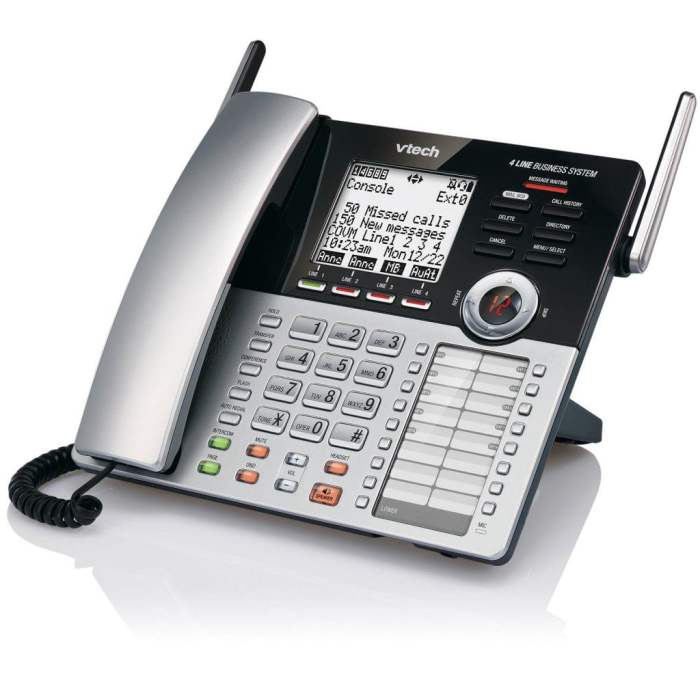
Selecting the ideal business phone system can significantly impact your operational efficiency and customer experience. A well-chosen system streamlines communication, improves team collaboration, and enhances your professional image. Conversely, a poorly chosen system can lead to lost calls, frustrated employees, and a negative impact on your bottom line. This section provides a structured approach to help small businesses navigate this crucial decision.
A Step-by-Step Guide to Selecting a Business Phone System
Choosing the right phone system involves careful consideration of several factors. A systematic approach ensures you make an informed decision that aligns with your business needs and budget. This step-by-step guide will lead you through the process.
- Assess Your Current Communication Needs: Begin by thoroughly analyzing your existing communication workflows. Consider the number of employees, call volume, location of employees (remote or on-site), and the types of communication features you currently use (e.g., voicemail, conferencing). This assessment forms the foundation for determining the features and capacity required in your new system.
- Define Your Budget and Scalability Requirements: Establish a realistic budget that accounts for initial setup costs, monthly fees, and potential future upgrades. Consider your projected growth and ensure the chosen system can scale to accommodate future expansion without significant disruption or added expense. For example, a system supporting 10 users now should ideally be easily expandable to 20 or more in the next few years.
- Research and Compare Different Phone System Options: Explore various types of systems (cloud-based, on-premise, hybrid) and vendors, comparing features, pricing, and customer reviews. Look for systems that offer features like call forwarding, voicemail-to-email, auto-attendants, and integration with other business tools.
- Request Demonstrations and Trials: Before committing to a system, request demonstrations from shortlisted vendors to assess user-friendliness and functionality. If possible, utilize free trials to test the system in a real-world setting with your team.
- Negotiate Contracts and Terms: Carefully review contract terms, including service level agreements (SLAs), cancellation policies, and support options. Negotiate favorable terms and ensure you understand all aspects of the agreement before signing.
Questions to Ask Potential Providers
Asking the right questions is crucial in making an informed decision. This checklist provides essential inquiries to pose to potential providers.
- What is the total cost of ownership, including setup fees, monthly subscriptions, and any additional charges?
- What are the system’s scalability options and the associated costs for adding users or features?
- What level of technical support is provided, and what are the response times for support requests?
- What security measures are in place to protect sensitive customer and business data?
- What is the system’s reliability and uptime guarantee?
- Does the system integrate with other business applications we use (e.g., CRM, calendar)?
- What training and documentation are provided to users?
Best Practices for Implementing and Managing a New Business Phone System
Successful implementation and ongoing management are critical for maximizing the return on your investment. These best practices ensure a smooth transition and efficient operation.
- Develop a comprehensive implementation plan: This plan should Artikel timelines, responsibilities, and training schedules for all users. Consider phased rollouts to minimize disruption.
- Provide thorough training to employees: Invest in comprehensive training to ensure all users understand the system’s features and functionality. This reduces errors and improves overall efficiency.
- Establish clear communication protocols: Define standard operating procedures for handling calls, voicemail, and other communication tasks. Consistency ensures a professional image and efficient communication.
- Regularly monitor system performance and usage: Track key metrics like call volume, call duration, and customer satisfaction to identify areas for improvement. This allows for proactive adjustments to optimize the system.
- Stay updated on system upgrades and security patches: Regular updates ensure the system remains secure and operates efficiently. This minimizes vulnerabilities and maximizes system lifespan.
Future Trends in Business Phone Systems
The landscape of business communication is constantly evolving, driven by technological advancements and changing business needs. Small businesses, in particular, stand to benefit significantly from emerging technologies that promise to streamline operations, improve customer service, and enhance overall efficiency. Understanding these trends and preparing for their impact is crucial for maintaining a competitive edge.The integration of Artificial Intelligence (AI) and unified communications platforms is reshaping how small businesses interact with customers and manage internal communication.
These advancements offer significant potential but also present challenges that require careful consideration.
Artificial Intelligence in Business Phone Systems
AI is rapidly transforming business phone systems, offering features like intelligent call routing, automated assistants, and advanced analytics. Intelligent call routing uses AI to direct calls to the most appropriate agent based on factors such as skillset, availability, and call context. This improves response times and customer satisfaction. Automated assistants, powered by natural language processing (NLP), can handle routine inquiries, freeing up human agents to focus on more complex tasks.
Advanced analytics provide insights into call patterns, agent performance, and customer behavior, enabling data-driven improvements in communication strategies. For example, a small bakery could use AI to automatically route calls about catering orders to a dedicated team member, while general inquiries are handled by a virtual assistant. The challenge lies in the initial investment and ongoing maintenance required for AI-powered systems, as well as the potential for AI to misinterpret customer needs if not properly trained.
Unified Communications as a Service (UCaaS)
UCaaS platforms integrate various communication tools—voice calls, video conferencing, messaging, and collaboration—into a single, cloud-based system. This integration simplifies communication management, improves team collaboration, and reduces costs associated with managing multiple disparate systems. For instance, a small marketing agency could use a UCaaS platform to conduct video conferences with clients, share files instantly, and communicate internally through instant messaging, all within a single interface.
The challenge lies in choosing a platform that integrates seamlessly with existing systems and provides the necessary features and scalability for the business’s needs. Poor integration can lead to frustration and decreased efficiency, negating the intended benefits.
Preparing for Future Changes
Small businesses can proactively prepare for the future of business phone systems by:
- Regularly evaluating their current communication needs and identifying areas for improvement.
- Researching and comparing different UCaaS and AI-powered solutions to find the best fit for their business size and budget.
- Investing in employee training to ensure they can effectively utilize the new features and functionalities of advanced phone systems.
- Developing a robust data security plan to protect sensitive customer and business information.
- Staying informed about the latest industry trends and technological advancements through industry publications, webinars, and networking events.
By embracing these emerging technologies and adopting a proactive approach to change, small businesses can leverage the power of advanced communication systems to enhance their operations, improve customer experiences, and gain a competitive advantage in the marketplace.
Case Studies
Successful implementation of a new business phone system can significantly impact a small business’s efficiency and customer satisfaction. The following case studies illustrate how different businesses tackled their communication challenges and reaped the rewards of upgrading their phone systems. Each example highlights the specific system used, the challenges overcome, and the positive outcomes achieved.
Case Study 1: The Flourishing Bakery
The Flourishing Bakery, a rapidly growing local bakery, was struggling to manage its increasing order volume with its outdated landline system. Multiple lines were constantly busy, leading to lost sales and frustrated customers. Employees struggled to access voicemail messages efficiently, delaying order processing and customer service.
The bakery implemented a cloud-based VoIP phone system from RingCentral. This allowed them to add virtual extensions for each employee, regardless of their physical location, improving call routing and reducing missed calls. The system also included advanced features such as call recording for quality control and integrated voicemail-to-email, allowing staff to quickly access and respond to messages. The result was a significant increase in order fulfillment efficiency, improved customer satisfaction, and a noticeable reduction in lost sales.
Case Study 2: The Growing Consulting Firm
A small consulting firm, initially relying on personal cell phones for business communication, faced challenges related to professionalism and scalability. Maintaining a consistent business image was difficult, and managing calls across multiple personal devices proved inefficient and prone to missed calls.
They chose a hosted PBX system from Nextiva. This provided them with a professional business phone number, auto-attendant, and call forwarding capabilities. The system also integrated seamlessly with their existing CRM, improving lead management and customer relationship tracking. The implementation eliminated the unprofessional image associated with using personal cell phones and streamlined communication, allowing the firm to focus on client service and growth.
Case Study 3: The Expanding Online Retailer
An online retailer experienced rapid growth but lacked a centralized system for managing customer inquiries and support. Their previous system relied on individual employees managing their own email inboxes and phone calls, resulting in inconsistent customer service and delayed responses.
They adopted a fully integrated cloud-based system from 8×8. This provided a unified communication platform, combining voice, video conferencing, chat, and SMS messaging into a single interface. This allowed the team to handle customer interactions efficiently through the channel preferred by the customer. The improved communication and responsiveness resulted in increased customer satisfaction and a boost in online reviews.
The system’s analytics also provided valuable data on call volumes and customer interactions, helping the retailer optimize their customer service strategies.
Selecting the optimal business phone system is a significant decision impacting productivity and operational efficiency. By carefully considering the factors Artikeld – system type, key features, cost implications, and future trends – small businesses can confidently choose a solution that aligns with their current needs and future growth aspirations. Investing in the right communication infrastructure is not merely an expense; it’s a strategic move towards enhanced communication, improved customer service, and ultimately, business success.
FAQ Resource
What is VoIP?
VoIP (Voice over Internet Protocol) uses the internet to transmit voice calls instead of traditional phone lines, often offering cost savings and flexibility.
How much should I budget for a business phone system?
Costs vary greatly depending on the system type, number of users, and features. Expect to pay anywhere from a few dollars per user per month to several hundred dollars per month for more comprehensive solutions.
Can I integrate my phone system with my CRM?
Yes, many modern phone systems offer CRM integration, allowing you to see customer information and manage calls directly within your CRM software.
What is the difference between on-premise and cloud-based systems?
On-premise systems are physically located at your business, requiring more upfront investment and IT maintenance. Cloud-based systems are hosted off-site, offering greater flexibility and scalability.


